

2016 vs 2026: A Decade of Transformation - Reflecting on the Evolution of India’s Tax Laws
The decade from 2016 to 2026 marks India’s transition from a complex, enforcement-driven tax regime to a simplified and technology-led system that has fundamentally reshaped tax law and practice
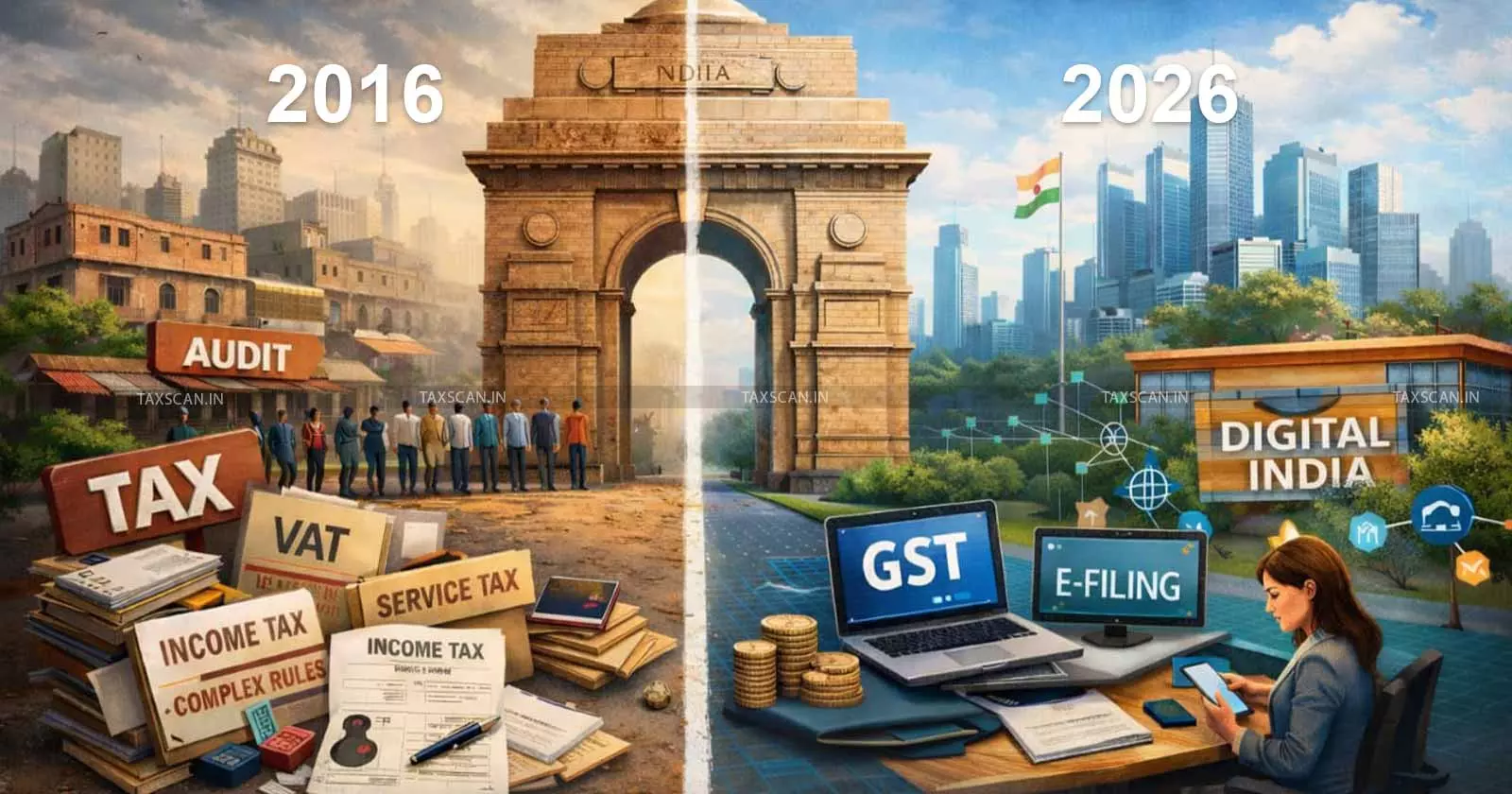
The Indian tax system has undergone major transformation during the ten year period from 2016 until 2026. Reform throughout these ten years was the impetus for a comprehensive reevaluation of all aspects of tax legislation, the manner by which taxes are administered, and how compliance is viewed and pursued.
During these ten years, the tax system has transitioned from being a complex set of processes and procedures to one that is clear, from manually performing tax functions to utilizing technology for tax compliance, and from adopting an adversarial enforcement model to an administration model that focuses on getting compliance from the taxpayer.
These changes that have occurred in taxation legislation over the next ten years, representing significant changes in which taxation has been conceptualized, executed, and enforced within the context of the Indian economy. This article dives into the fundamental transformation of Indian tax jurisprudence, reflecting upon what was the law before and what it is now.
2016: The Starting Point of Structural Reform
In 2016, India’s tax framework was still anchored in legacy legislation, most notably the Income Tax Act, 1961. Over the years, the Act adopted numerous changes complicating the ability of a tax payer to comply and providing different interpretations; which resulted in lengthy lawsuits while producing different outcomes.
An important reform that occurred in 2016 was the elimination of the 1957 Wealth Tax Act, as a minimal contributor of revenue it was found that compliance and valuation of wealth increased substantially so the Government replaced it with a surcharge on all high earning individuals, providing a means of greater revenue while simplifying the tax scheme structure.
Subsequently, the Income Declaration Scheme, 2016, was introduced as a once in a lifetime opportunity program allowing taxpayers to declare disclosed income sources to do by paying back taxes, surcharge and penalty on those undisclosed sources. While the program’s immediate purpose was to produce revenue for the state, the longer term objective was to help reinforce the Governments’ move toward data informed enforcement with voluntary compliance.
A major development occurred in 2016, was the enactment of One Hundred and First Amendment Act, establishing the constitutional framework for GST. This represented the first step towards transitioning India from a fragmented system of indirect taxation to a unified national tax system. While actual implementation of GST occurred in 2017, the policy changes driving the implementation of GST were set in place by the end of 2016.
The Transition Years
The time period following 2016 to present has witnessed accelerated institutional and technological change. Tax administrations have begun to transition away from manual processes towards digitization. The use of e-filing, automated processing, faceless assessment processes and electronic interfaces is now the norm rather than the exception.
There has also been a gradual change in administrative philosophy as well. The Revenue Authorities shifted away from an enforcement-heavy approach to one that is based on risk and data. Technology has become a central instrument for the identification of discrepancies, issuance of notices or facilitating compliance, thereby reducing the level of judgement that can be applied to compliance decisions and increasing transparency.
At the same time, GST entered a phase of consolidation. What began as issues relating to GST such as rate structures, compliance burden, and system glitches are now giving way to a stable framework. Businesses and professionals have benefited from a more stable and predictable environment due to improved IT infrastructure; thereby, providing certainty through rate rationalization and streamlined filing of returns.
2026: A New Era in Tax Legislation and Administration
In contrast, India now has completely transformed the philosophy of its tax system. The introduction of a new Income Tax Act, 2026 is about to replace the existing Income Tax Act of 1961 noting as the most significant milestone in this transformation.
Previously, amendments to the Income Tax Act, 1961 were primarily focused on changing rates and making specific changes to existing provisions. The new law, however, represents a complete restructuring of the manner in which the income tax statute will simplify language, eliminate redundant provisions, and reorganise the statute so it is easier for taxpayers and tax professionals to understand and administer.
By 2026, tax administration has been substantially driven by technology. Faceless assessments, faceless appeals, and use of technology to assist in monitoring compliance will have become institutionalised. Compliance monitoring will increasingly rely on data analytics, artificial intelligence, and automated risk profiling. The focus of tax administration has shifted from post-facto compliance activities to preventing non-compliance.
Goodsand Services Tax (GST) also matured by 2026, from a system characterised by frequent rate changes and procedural issues to one that has stabilised as a result of rate rationalisation, improved IT systems and greater clarity regarding the interpretation of GST.
Comparison Table: 2016 vs 2026
| Aspect | 2016 | 2026 |
| Direct Tax Law | Income Tax Act, 1961 with layered amendments | New Income-tax law with simplified structure |
| Legislative Approach | Incremental reforms | Holistic restructuring |
| Tax Administration | Manual and scrutiny-driven | Digital, faceless, data-driven |
| Compliance Philosophy | Enforcement oriented | Facilitative and risk based |
| GST Status | Constitutional framework stage | Stabilised national tax regime |
| Litigation Environment | High volume and ambiguity | Reduced due to clarity and automation |
| Role of Professionals | Litigation focused | Advisory and compliance centric |
India's taxation history can be divided into two periods - prior to 2016 and after 2016. The transition from 2016 to 2026 is marked by a significant shift in India's tax approach. Initially, India set forth a vision to simply and modernise its tax system; however, the current status demonstrates a comprehensive rethinking of how tax is governed. The movement from complexity to clarity, from discretion to data, and from enforcement to facilitation has created an important chapter in India's fiscal history.
Support our journalism by subscribing to Taxscan premium. Follow us on Telegram for quick updates
