

Budget 2025-26 Delivers on Customs Duty Reforms: Healthcare, Exports, Manufacturing Sectors Gain from BCD Cuts and Exemptions
Together, these reforms reflect the government’s delivery on budget commitments and its focus on affordability, competitiveness, and industrial growth.
To fulfil the promises made in budget 2025-26, the Central Government of India has implemented a wide range of customs duty reforms. The main aim is to boost domestic manufacturing. It can also facilitate exports and improve the affordability of healthcare, as far as the common men are concerned.
To support patients battling cancer, rare and chronic diseases, the government exempted 6 lifesaving drugs from Basic Customs Duty (BCD) and added six more at a concessional 5% rate. Bulk drugs used in their manufacture also benefit.
Additionally, 37 medicines and 13 new Patient Assistance Programmes were brought under full BCD exemption when supplied free of cost.
Handicraft exporters now enjoy an extended export timeline, from six months to one year, with a further three-month grace period.
Nine new inputs were added to the duty-free list. Similar relief was extended to railway goods imported for repair, aligning their export timelines with aircraft and ship MRO norms.
In the seafood sector, BCD on frozen fish paste (Surimi) was reduced from 30% to 5%, and fish hydrolysate for feed from 15% to 5%.
The leather industry saw full BCD exemption on Wet Blue leather and removal of 20% export duty on crust leather, benefiting small tanners.
To prevent classification disputes, BCD on carrier grade ethernet switches was reduced from 20% to 10%, bringing parity with non-carrier-grade switches.
Considering the long gestation period in shipbuilding, BCD exemption on raw materials, components and consumables for ship manufacturers was extended to another 10 years.
To promote lithium-ion battery production, 35 capital goods for EV batteries and 28 for mobile phone batteries were added to the BCD exemption list.
In electronics, BCD on Interactive Flat Panel Displays was raised to 20% to correct the inverted duty structure, while parts of Open Cells for LCD/LED TVs were fully exempted.
To promote domestic production of technical textiles such as agro textiles, medical textiles and geo textiles, two additional types of shuttle-less looms have been added to the list of fully exempted textile machinery.
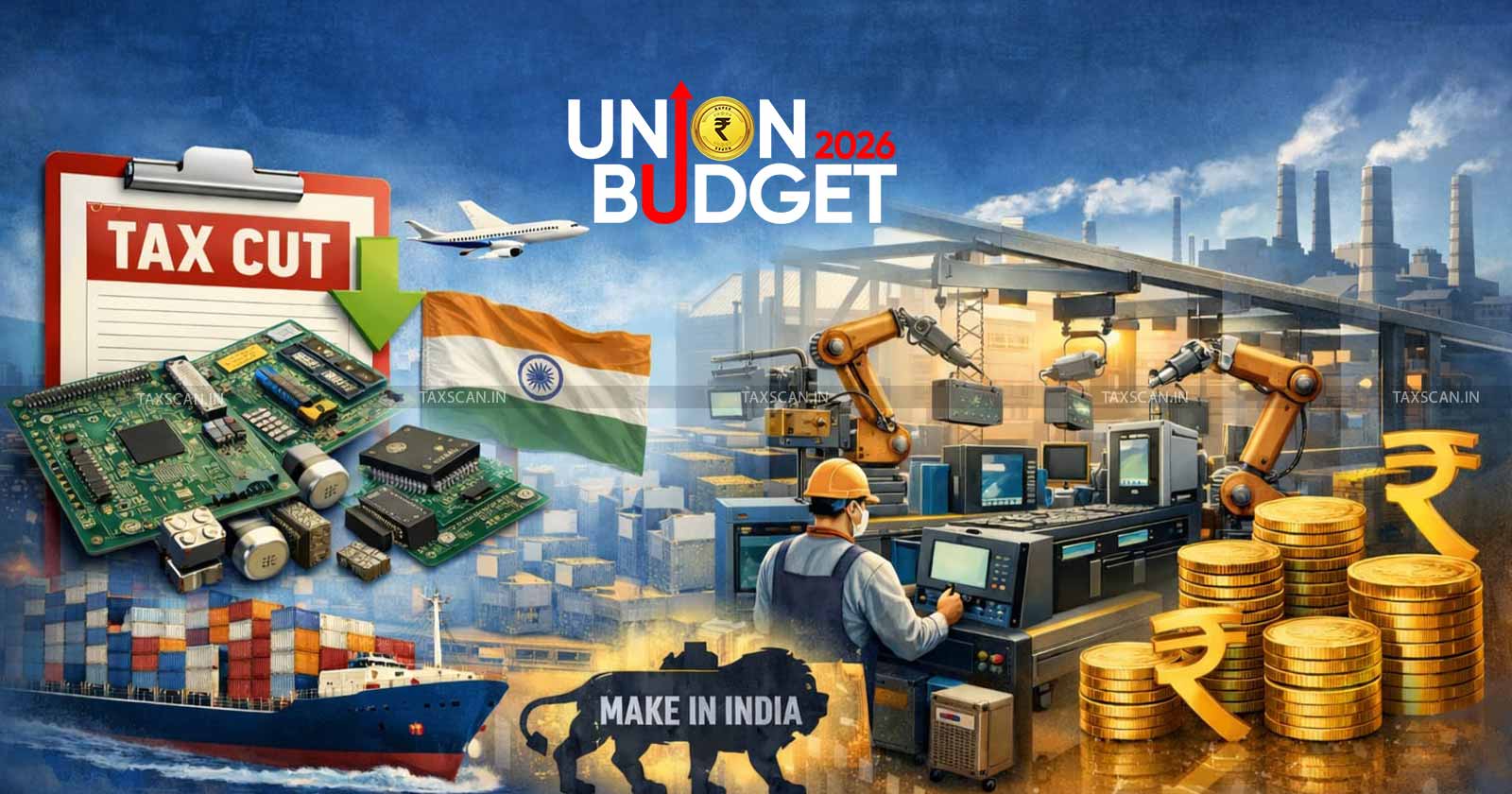
BCD was fully exempted on cobalt powder, lithium-ion battery scrap, lead, zinc, and 12 other critical minerals to secure supply chains and support MSMEs.
The customs tariff structure was simplified by removing seven additional tariff rates, leaving only eight slabs, including zero. Social Welfare Surcharge was also exempted on 82 tariff lines where cess applies.
Together, these reforms reflect the government’s delivery on budget commitments and its focus on affordability, competitiveness, and industrial growth.
Support our journalism by subscribing to Taxscan premium. Follow us on Telegram for quick updates
