Budget 2026: BCD Exemption Proposed on Sodium Antimonate Imports Used in Solar Glass Manufacturing
While a rate reduction lowers the tax percentage, an exemption entirely removes the obligation to pay BCD on qualifying imported inputs.
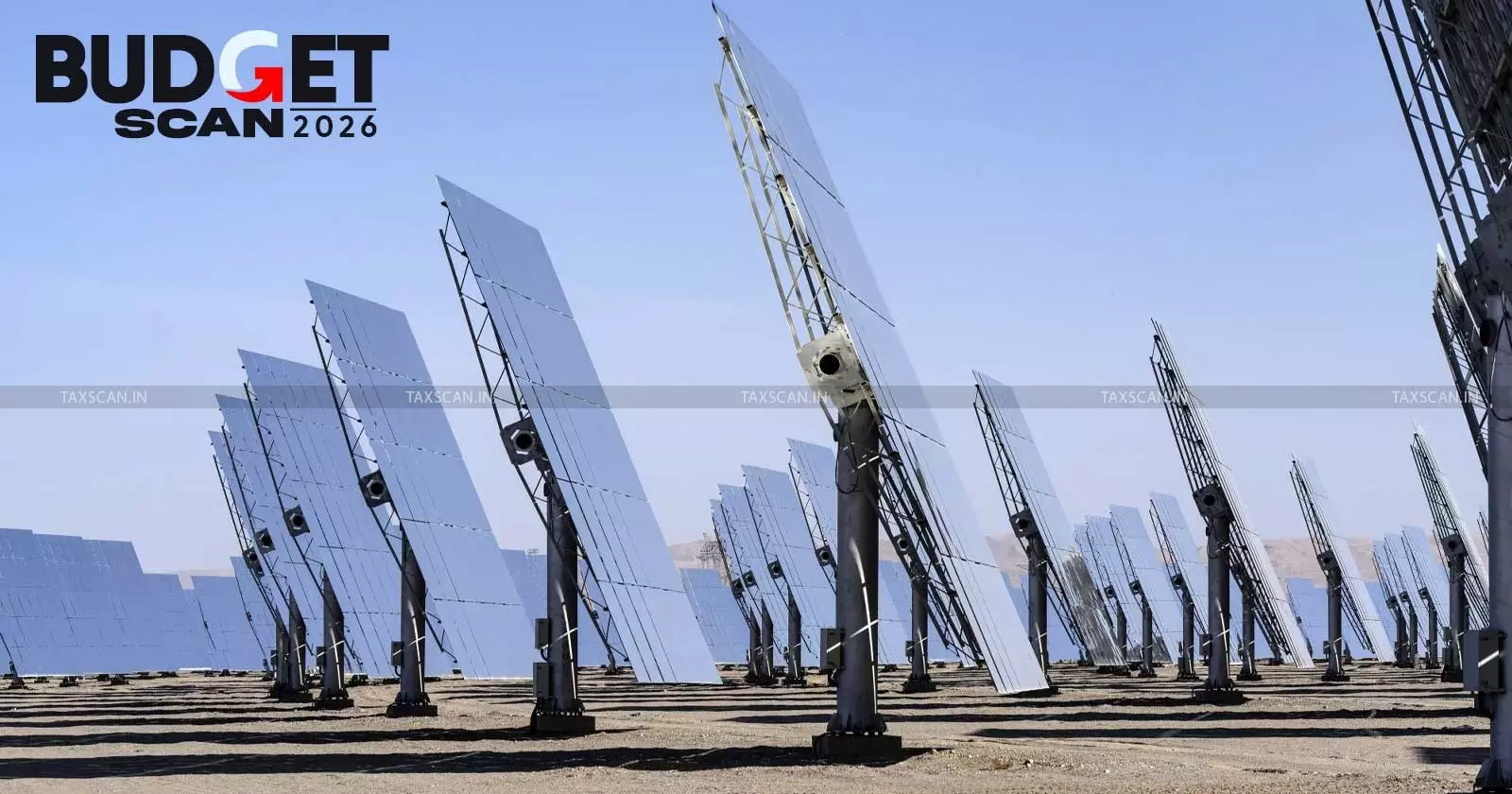
In the Union Budget for the year 2026-27 presented by Finance Minister Nirmala Sitharaman, India has put forward a proposal to exempt sodium antimonate from BCD when imported for manufacturing solar glass. Solar glass is an essential input in the PV solar panel supply chain and therefore, the exemption will provide targeted fiscal relief and represent a long-term strategy to accelerate domestic manufacturing of solar products, thereby lowering input costs and helping to support India's renewable and clean technology ambitions
Understanding the Policy
Under India's Customs Tariff System, the first layer of tax on imported items includes basic customs duty (BCD) on certain imported goods. For the 2026 Budget, the Finance Minister has proposed a BCD of sodium antimonate used in solar glass manufacture from 7.5% to nil, effective from 2 February 2026. This amendment to the current law will be made by inserting a new entry at S. No 110A into TABLE I of Notification No 45/2025-Customs and Notification No 02/2026-Customs.
Legal Position
Sodium antimonate classified under tariff item 2841 90 00 of the Customs Tariff Act of 1975 is a raw material that is added at low levels as a fining agent in the production of glass. Fining agents are chemical compounds used to eliminate bubbles and other transitional materials that impede optical clarity in the formed glass. In the case of photovoltaic (PV) modules, optical clarity of the glass substrate is required for high-performance solar panels.
🏛️ Union Budget 2026–27 decoded with laws and notifications | Click Here
Within the context of the Budget, the tariff table for this item clearly states that: “Basic customs duty on sodium antimonate for use in the production of solar glass, has been reduced from 7.5% to 0%”.
Sodium Antimonate (Customs tariff: 2841 90 00) is a raw material that is added at low levels as a fining agent in the production of glass. Fining agents are chemical compounds used to eliminate bubbles and other transitional materials that impede optical clarity in the formed glass. In the case of photovoltaic (PV) modules, optical clarity of the glass substrate is required for high-performance solar panels.
Within the context of the Budget, the tariff table for this item clearly states that:
“Basic customs duty on sodium antimonate for use in the production of solar glass, has been reduced from 7.5% to 0% (nil).”
Legal and Policy Considerations
The legal and policy rationale for the removal of the duty on sodium antimonate is multi-faceted and supports several government objectives:
- Reducing Domestic Input Costs: By removing the 7.5% tariff on imported sodium antimonate, which domestic glass manufacturers may have sourced from foreign sources, the exemption will create a lower input cost for the production of solar glass; this type of glass is considered a key intermediate input to the solar value chain.
- Domestic Solar Manufacturing Development Objective: India has long focused on reducing imports and creating domestic value-addition to businesses involved in the renewable energy manufacturing sector. The lowering or removing of duty on certain inputs can assist domestic solar glass manufacturers in being able to compete and reduce their dependency on imported finished glass or components.
- Encouraging Larger Scale Use of Renewable Energy: As India continues to shift from fossil fuels to renewables, expanding the amount of solar photovoltaic installed capacity is essential to achieving its clean energy objectives. Industry studies have shown that there are bottlenecks in the downstream manufacturing of solar panels, such as raw material inputs - glass and modules, thereby this tariff policy will impact competitive position.
Interplay With Other Budget Measures
The exemption from the BCD on Sodium Antimonate is in line with other tariff reforms in the renewable energy and clean tech sectors that were included in the 2026 Budget. In addition to this, the government has:
- Provided an extension to BCD exemptions on capital goods used in the manufacturing of Lithium-Ion Cells and Battery Energy Storage Systems, and
- Introduced exemptions for critical minerals such as Monazite.
These measures represent a bundled approach to reducing tariff costs throughout renewable energy value chains, both upstream and downstream. The 2026 Budget BCD exemption for Sodium Antimonate imports when used to manufacture solar glass products is an exact fiscal intervention that reflects the Government’s overall legal objectives of encouraging domestic clean energy supply.
Support our journalism by subscribing to Taxscan premium. Follow us on Telegram for quick updates