Check-Post Officers Cannot Examine Valuation of Goods During Transit Under GST: Andhra Pradesh HC [Read Order]
The High Court held that check-post officers cannot examine valuation of goods in transit under GST and ordered release of the seized consignments.
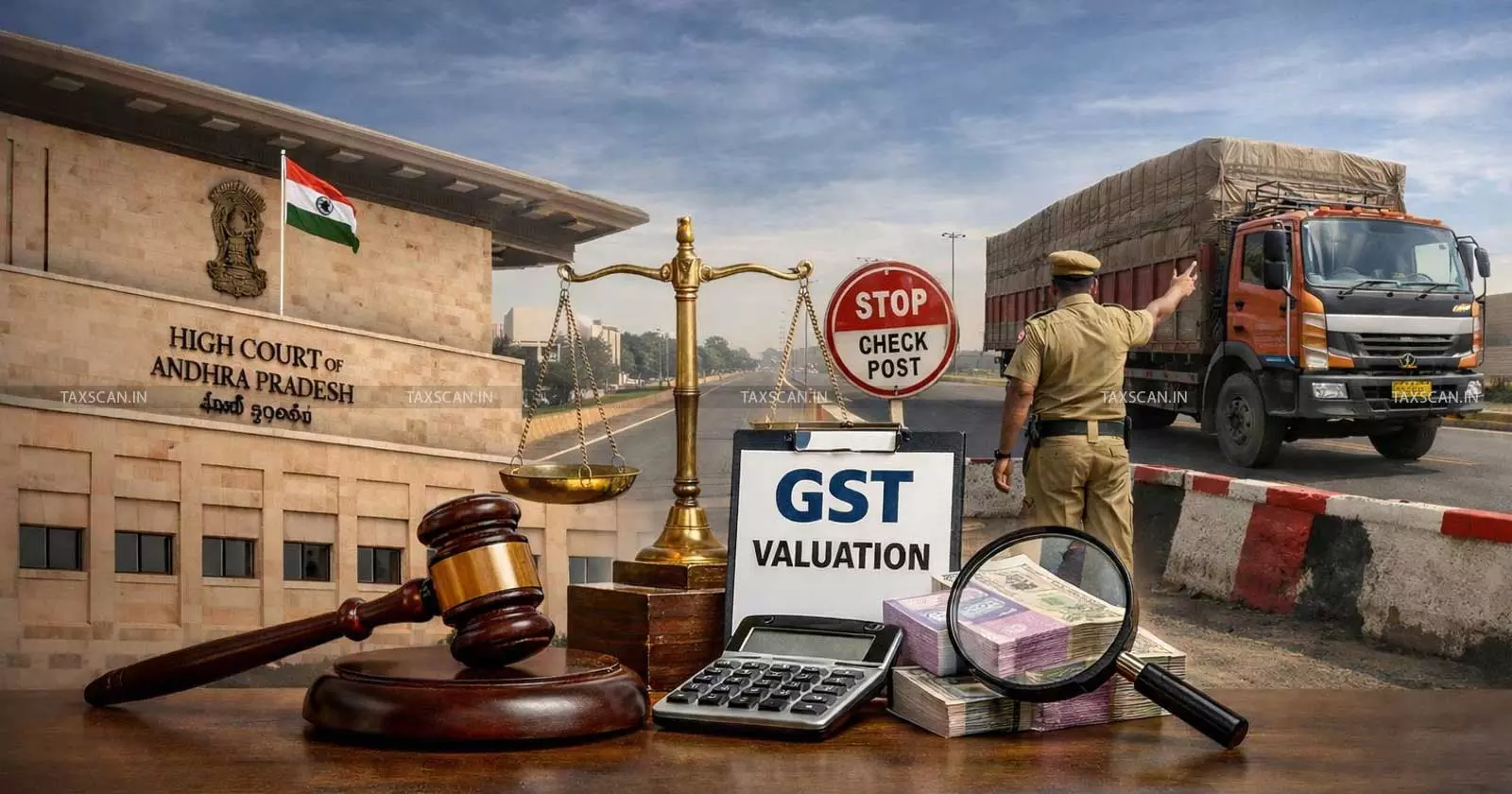
In a recent ruling, the Andhra Pradesh High Court held that check-post officers cannot examine the valuation of goods in transit while exercising powers under Sections 129 and 130 of the Central Goods and Services Tax (CGST) Act and directed release of the seized goods.
The case arose from multiple writ petitions filed by traders including Golden Traders, T.M. Enterprises, Al Badar Spices, R.G. Traders, Shiva Traders and others challenged the seizure and confiscation of goods that were being transported. The GST authorities had initiated proceedings under Sections 129 and 130 of the CGST Act on the ground that the goods in transit were grossly undervalued.

The petitioners argued that all the required documents under Section 68 of the GST Act were available during transportation in most of the cases and the authorities at the check-post had no power to examine valuation of goods during transit. They contended that issues relating to valuation and tax liability must be examined by the jurisdictional assessing authority and not by officers intercepting goods during transit.
The Division Bench comprising Justice R. Raghunandan Rao and Justice T.C.D. Sekhar observed that several High Courts have already taken the view that valuation disputes cannot be examined during proceedings under Sections 129 or 130 of the GST Act. The court explained that the question of valuation and tax payable on such goods must be considered by the assessing authority in appropriate proceedings.
The court also observed that the purpose of Sections 129 and 130 is to ensure compliance with taxation laws and to prevent loss of revenue to the State where tax is payable. The Bench pointed out that authorities of a State through which goods are merely passing in transit cannot reasonably confiscate goods or impose penalties on the ground of alleged tax evasion in another State.

The court further examined one of the cases where the authorities claimed that no e-way bill was available at the time of inspection. The court observed that Rule 138C of the CGST Rules requires that inspection reports must be recorded online within the prescribed time. In the present case, the alleged earlier inspection had not been recorded and the report prepared later did not mention any earlier inspection.
In view of these circumstances, the High Court allowed the interlocutory applications and directed that the seized goods and vehicles be released to the petitioners. The court also directed that fresh samples of the goods may be drawn in the presence of the parties and sent to the jurisdictional assessing authority for further proceedings relating to valuation.
Support our journalism by subscribing to Taxscan premium. Follow us on Telegram for quick updates