Cloud Computing- A Catalyst for Paperless Accounting and Green Finance
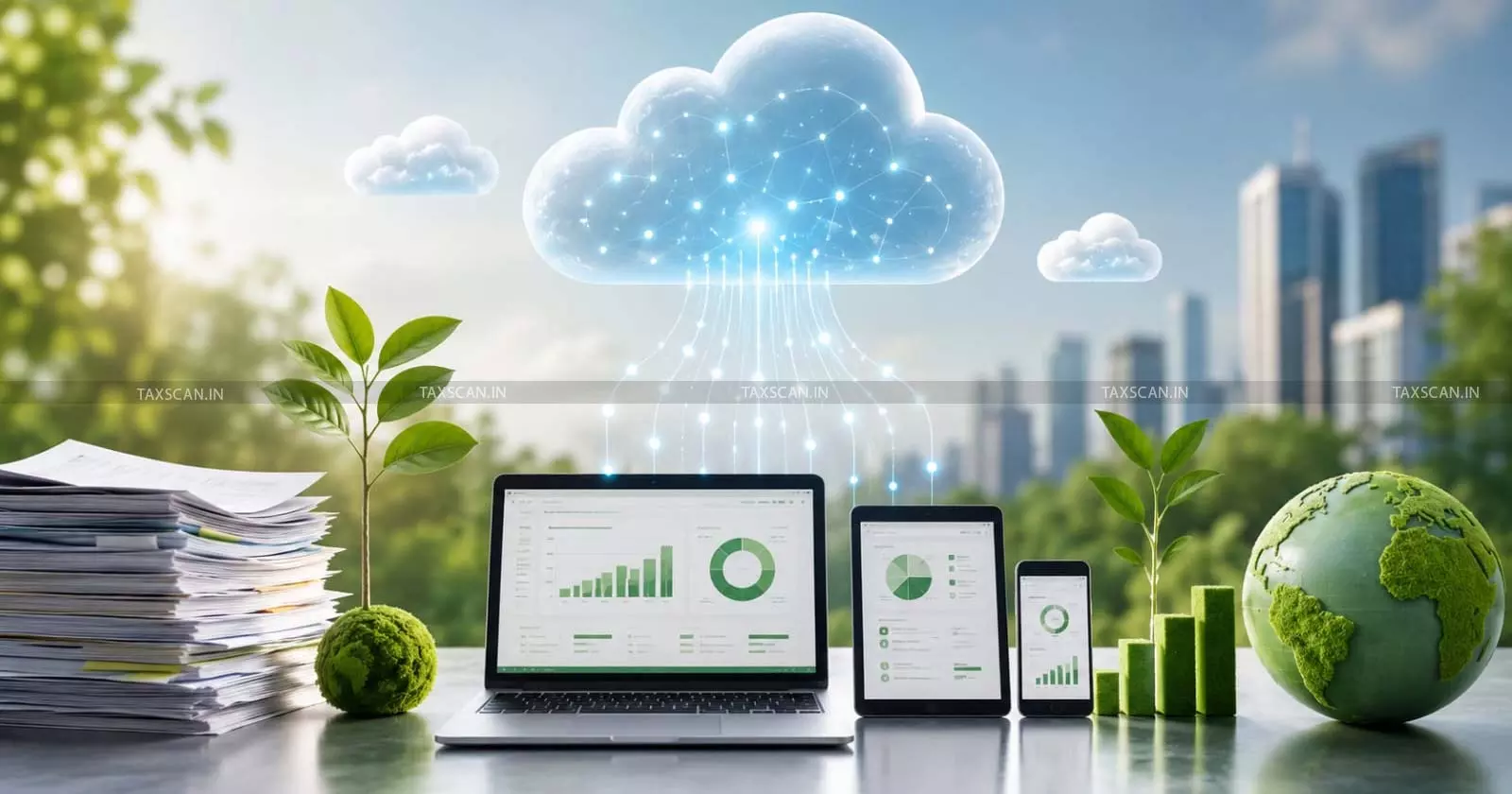
The sustainability promotion and environmental impact reduction work of cloud computing and green finance form a direct link between these two fields. Green cloud computing unites energy-saving technologies with environmentally friendly approaches which operate within cloud systems to decrease power consumption and reduce electronic waste and draw power from renewable energy sources.
Introduction
A dual transformation is undergoing in the global business environment digitalization and sustainability. Increasing expectation is present not only to improve efficiency and profitability but also to reduce environmental impact and adopt responsible business practices. Hence, cloud computing has emerged as a foundational technology that supports both the objectives of digitalization and sustainability simultaneously.
For the accounting and finance profession, involving Chartered Accountants, the new era of cloud computing is reshaping traditional accounting systems, enabling paperless operations, and contributing meaningfully to the concept of green finance. A redefining is happening due to the convergence of technology and sustainability on how financial information is created, stored, analyzed, and reported.
Evolution from Traditional to Paperless Accounting
Traditionally, accounting practices have been heavily reliant on physical documentation. Ledgers, vouchers, invoices etc. were stored in paper form, requiring significant storage space, manual handling and administrative effort. The system was not only time consuming but also prone to inefficiencies such as data duplication, loss of records and delayed reporting impacting efficiency.
The first major change was the move from paper based processes to computerized accounting systems. However, with the advent of cloud computing, a fully paperless accounting environment is now possible where the need for local storage and physical documentation is eliminated.
Cloud-based platforms now enable the full digital creation, storage, verification and sharing of financial records, cutting reliance on paper. Cloud Computing Role in Enabling Paperless Accounting

How Cloud Computing is Facilitating Paperless Accounting
Cloud computing provides the technological infrastructure for building a fully digital environment for accounting. It enables data and applications to be stored on remote servers and accessed over the internet, eliminating the requirement for physical systems.
1. Digital Storage Centralized
Cloud platforms offer the chance to store financial data in one central location, keeping all accounting records in a structured and secure digital environment. You do not need to create any physical filing systems.
2. Real-time access to data
The authorized users can access the data stored in the cloud in real time, leading to faster decision making and better financial control.
3. Automation of Accounting Tasks
Automations programs can be embedded in the online accounting software to facilitate the automation of tasks like invoice generation, reconciliation, payroll management, and expense monitoring.
4. Collaborative Nature
The online nature of the system allows various people like the client, accountant, auditor, consultant, etc., to share the same financial data and make changes at the same time.
5. Digital Audit Trail
The cloud systems digitally record each transaction with a high level of detail, making it very easy to track changes, verify data integrity, and hold everybody accountable.
Cloud Computing Concept and Green Finance
Green finance refers to financing activities aimed at ensuring environmental sustainability while mitigating adverse effects to the environment. The concept encompasses any investment or financial practice that seeks to be environmentally friendly and climate conscious. In this regard, cloud computing has played a crucial role in facilitating green finance in many ways.
1. Minimized Paper Usage
The use of cloud technology in accounting helps to save millions of trees by eliminating the need for paperwork. Paperwork has been part and parcel of conventional accounting, with millions of paper prints used annually for documentation and auditing processes.
2. Reduced Energy Usage in Operations
Cloud computing technology uses state-of-the-art energy-efficient facilities. These facilities have better energy optimization features compared to conventional IT infrastructures.
3. Decrease in the Use of Physical Resources
Paperless accounting systems minimize the requirement of physical storage places, storage cabinets, transport of documents, and office space used for record keeping purposes. This, in turn, decreases the carbon footprint of any organization.
4. Facilitation of ESG Reports
Cloud technology makes an immense contribution towards facilitating the compilation of ESG reports as it integrates various sustainability-related information.
Impact of Cloud Technology on Chartered Accountants
As a consequence of increased use of cloud technology, the range of duties undertaken by Chartered Accountants has expanded. They are no longer only responsible for bookkeeping, but also play a pivotal role in assisting firms with their digitalization process.
1. Implementation of Cloud Accounting Systems
Chartered Accountants help organizations shift from conventional accounting systems to cloud-based solutions, ensuring a seamless transition and effective system integration.
2. Advice on Digital Financial Transactions
These help companies choose suitable cloud solutions and optimize their finances while ensuring compliance with digital rules.
3. Verification of Digital Evidence
Given that financial information is kept digitally in cloud computing, CAs play an important role in the verification of the correctness, safety, and validity of evidence.
4. Helping Organizations Achieve Sustainability Objectives
Chartered accountants promote the use of paperless accounting systems, contributing to green accounting practices and sustainability goals.
5. Risk Analysis and Governance
The risk analysis in cloud computing involves such aspects as cybersecurity issues, data confidentiality, and other important areas.
Challenges of Implementing Cloud Computing and Paperless Systems
However, despite its benefits, cloud computing brings certain difficulties for organizations and individuals using paperless financial systems.
1. Threats to Data Safety and Confidentiality
Data kept in the cloud can be vulnerable to various types of attacks and leaks due to the improper protection of the information.
2. Dependence on Internet Connection
For cloud computing systems to function, they need a steady and stable connection, disruptions may cause negative effects or temporarily affect financial data.
3. Various Laws and Regulations
Due to regulatory differences in different regions, implementation of cloud computing becomes complicated.
4. Resistance to Change
Organizations and professionals accustomed to traditional systems may resist transitioning to fully digital workflows.
5. Vendor Dependency
Risks may be created by reliance on cloud service providers, which may be related to service outages, pricing changes, and platform dependency.
Future Outlook
The expectation on the future of accounting and finance is that it will be fully integrated with cloud computing and other emerging technologies such as Artificial Intelligence, Machine Learning, Blockchain, and Big Data analytics as per the demand of the society.
This integration will lead to:
● Fully automated accounting ecosystems
● Real-time financial monitoring and reporting
● Predictive financial analytics
● Enhanced ESG compliance and sustainability tracking
● Increased reliance on digital audit systems
As these technologies are evolving there are chances that the paper-based accounting systems will become obsolete.
Conclusion
Cloud computing is acting as a powerful catalyst for transforming traditional accounting into a fully paperless and environmentally sustainable system for accounting. Cloud computing is reshaping the financial ecosystem by eliminating paper dependency, improving efficiency, and supporting green finance initiatives, which is the need of the hour.
This transformation represents a challenge as well as opportunity for Chartered Accountants and for those who embrace cloud technologies will not only enhance their professional capabilities but also contribute meaningfully to sustainability and responsible financial management in the future world.
In the long term, cloud computing will serve as a bridge between digital transformation and environmental responsibility, positioning Chartered Accountants as key drivers of sustainable economic and financial development.
Support our journalism by subscribing to Taxscan premium. Follow us on Telegram for quick updates