Comprehensive Guide to Input Tax Credit (ITC) on Motor Vehicles under GST: Decoding Section 17(5)(a) and Blocked Credits
The fundamental strength of the GST regime is the frictionless flow of credit across the supply chain as it is aimed at eliminating the cascading effect of taxes
Introduction
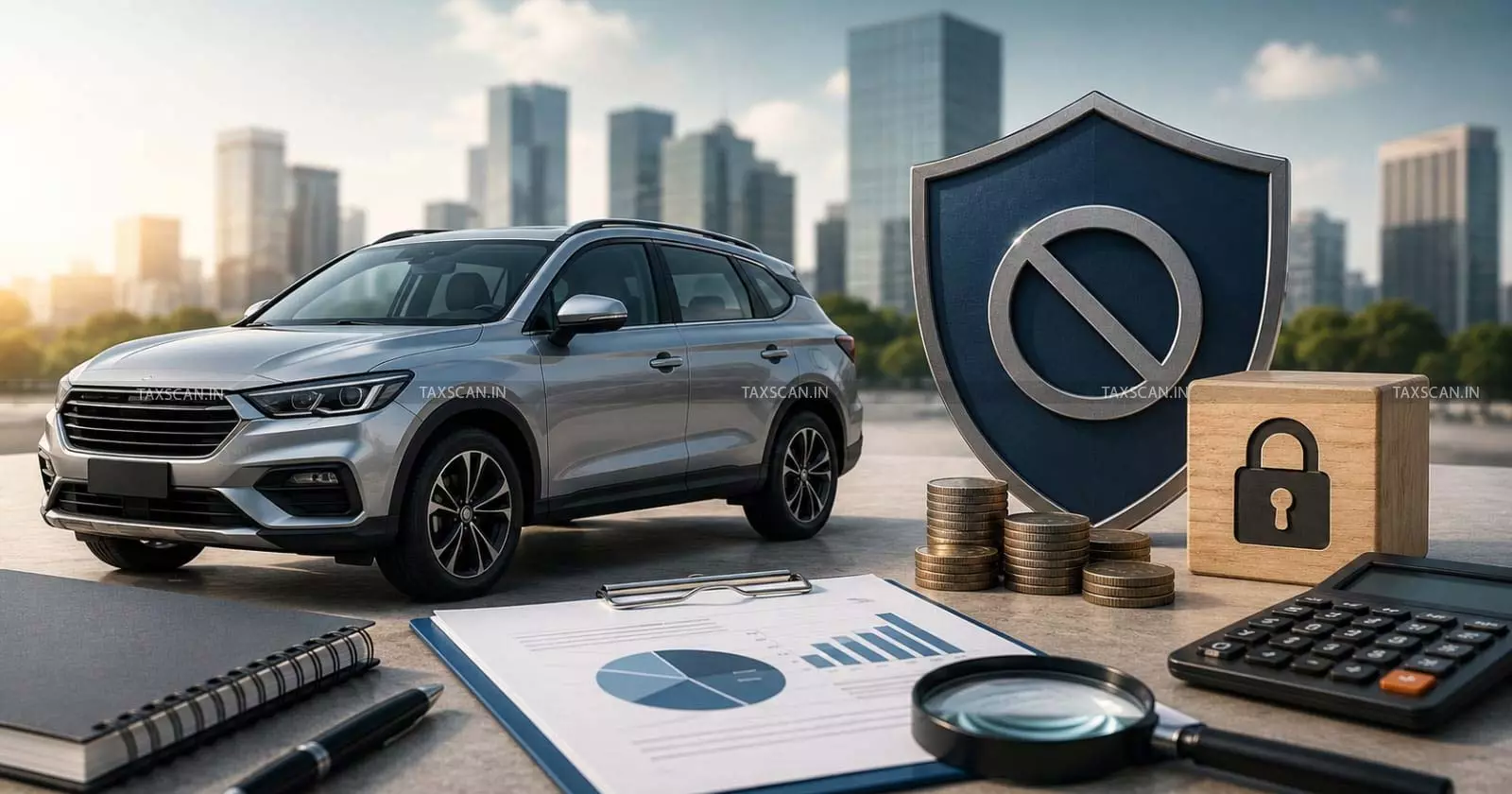
The introduction of Goods and Services Tax (GST) in India was a major reform in indirect taxes, which was mainly based on the principle of “Input Tax Credit” (ITC). The fundamental strength of the GST regime is the frictionless flow of credit across the supply chain as it is aimed at eliminating the cascading effect of taxes. But this flow is not absolute. The legislature has given specified exceptions under Section 17(5) of the Central items and Services Tax (CGST) Act, 2017, which limits the availability of ITC on certain items and services. Perhaps the most debated and misunderstood of these restrictions is the rule concerning ITC on motor vehicles.
The acquisition of motorvehicles is generally a large capital expense for a firm. The right or wrong to claim ITC on such acquisitions can have a major influence on the net cost of acquisition and the working capital of the company. The article deals with an exhaustive review of the legal rules, pertinent case laws and practical compliance requirements for ITC on motor vehicles.
The Statutory Barrier: Section 17(5)(a)
The main statutory barrier to claiming ITC on motor vehicles is Section 17(5)(a) of the CGST Act. The clause provides that input tax credit shall not be receivable in respect of the supply of goods or services or both obtained by a taxable person for construction of immovable property (other than plant and machinery) on his own account. However, in the case of motor vehicles particularly, the clause precludes ITC on:
"Motor vehicles” and other conveyances save when used for the following reasons, to wit:
(i) future supply of such vehicles or conveyances; or (ii) transport of people; or (iii) giving training in the driving, flying or navigating of such vehicles or conveyances.
A lot of argument has happened here about the phrase "motor vehicles". The basic guideline is taken from the interpretation of the Motor Vehicles Act, 1988, as emphasized in the accompanying graphic aid. The consensus and comments from the government indicate that the ban is primarily on passenger "carriages." As a result, vehicles that have less than 13 seats (i.e., automobiles, SUVs, and premium sedans) are subject to this limiting clause.

The Three Golden Exceptions
The Act offers three particular “ windows ” or exceptions to the broad ban where ITC is permitted. Knowing this is crucial for tax planning and compliance.
- Additional Vehicles Supply: This exception applies to automobile dealers and manufacturers. If a business purchases a motor vehicle for resale (further supply), the Input Tax Credit (ITC) on the purchase is completely eligible. The automobile is considered the dealer's "stock-in-trade." For example, a car dealer acquiring automobiles from the manufacturer can avail ITC and then use the same to pay output tax when the car is sold to the ultimate consumer.
- Passenger Transportation: This exception is for firms who are focused on logistics and transportation. If the entity utilizes the vehicle to carry passengers for a fare, like taxi operators, bus operators or ride-sharing services, they are able to claim ITC on the acquisition of these cars. Here the automobile is a tool of trade for generating taxable output supply.
- Training imparted: This category includes driving schools, flying academies etc. The ITC is permissible if the vehicle is used only for training on driving or navigation.
The Contention: Employee Transportation and Business Use
The use of automobiles for employee travel is a murky area and has resulted in a lot of litigation. Many corporations buy cars, to provide their staff a lift or for their senior management to utilize a car for company business. Is that “passenger transportation”?
The AARs (Advance Ruling Authorities) have generally taken a strict stance. In the matter of M/s. Cummins Technologies India Pvt. Ltd. (AAR Maharashtra), the authority ruled that ITC is not available on cars purchased for the use of top management even if utilized for official reasons as it does not fall under any of the three exceptions specified in Section 17(5)(a). “Transportation of passengers” means a service which is supplied to the public or clients for a charge and not internal employee transportation, the AAR ruled.
Similarly the case of M/s. Sree Rayalaseema Hi-Strength Hypo Ltd. (AAR Andhra Pradesh), it was held that ITC is banned on cars used for transportation of personnel as the company is not in the business of transportation of passengers.
Another point of view is entertained on goods carriages. The restriction in Section 17(5)(a) refers explicitly to “motor vehicles… intended for the carriage of passengers”. Thus, the phrase does not cover trucks, tempos and lorries employed for carriage of products. This was maintained in the rulings like M/s. Jai Jagannath Steels (AAR Uttarakhand) wherein it was held that ITC is accessible on trucks used for transporting commodities as the restriction is only on passenger cars. This is significant for logistics organizations, who can claim ITC on their truck fleet but not on a sedan purchased for administrative purposes.
GST Audit & Assessment notices are increasing... The question is: Are you prepared to handle them confidently? Practical Guide to Assessment & Audit under GST Grab your copy Now:
Judicial Interpretations and Judicial Precedents
In the historic case of Safeguard Educational and Welfare Trust vs. State of U.P. and Another, the Allahabad High Court has clarified the understanding of “motor vehicles”. The Court remarked that the restriction under section 17(5)(a) is confined to motor vehicles used for the carrying of passengers having a seating capacity of less than 13 persons. This verdict was a welcome relief in closely interpreting the statutory language. It further affirmed that vehicles with bigger seating capacity (like mini-buses) or those employed for goods are outside the ambit of the restriction.
The business expediency of such an expenditure has also been considered in the case of M/s. Volkswagen India Pvt. Ltd. Pre GST Laws provided ITC on basis of commercial expediency but GST Laws are more statute specific. If the use does not fall into one of the three exceptions, the business purpose test is generally not met under the law for these particular assets.
The Decision Tree Approach for Compliance
To simplify compliance, businesses can adopt the decision-tree approach illustrated in the image:
- Is it a motor vehicle? If no, the section does not apply (though 17(5)(b) might apply to vessels/aircraft).
- Is it for goods carriage? If yes, ITC is Allowed.
- Is it for passenger carriage with seating capacity < 13?
- If Yes: Check for exceptions (Sale, Transport Business, Training).
- If Exception Met: ITC Allowed.
- If Exception Not Met: ITC Blocked.
- If No (Capacity > 13): ITC Allowed.
Conclusion
The refusal of ITC on motor vehicles under Section 17(5)(a) is a hidden cost for enterprises which are not in the specified sectors indicated in the exclusions. It is a proxy for personal consumption; the legislature thinks that an automobile with a seating capacity of less than 13 passengers is used for personal reasons, even if registered in the name of a firm.
Businesses need to maintain accurate records. Where the vehicle is obtained under the " further supply " exception, evidence of the subsequent supply must be made. If acquired for “transportation of passengers”, the business must be able to show it is delivering a taxable supply of transportation services. Any variance or ambiguity is an invitation to litigation and demands from the tax department, turning a capital asset into a compliance problem. With jurisprudence evolving, taxpayers need to keep abreast with AAR and High Court pronouncements to successfully sail through these limits.
Support our journalism by subscribing to Taxscan premium. Follow us on Telegram for quick updates