Delhi HC Refuses to Assume Territorial Jurisdiction in case against IBBI, Notes Underlying CIRP is before NCLT Bengaluru [Read Order]
![Delhi HC Refuses to Assume Territorial Jurisdiction in case against IBBI, Notes Underlying CIRP is before NCLT Bengaluru [Read Order]](https://images.taxscan.in/h-upload/2026/06/04/2139062-refuses-to-assume-territorial-jurisdiction-case-against-ibbi-notes-underlying-taxscan.webp "Delhi HC Refuses to Assume Territorial Jurisdiction in case against IBBI, Notes Underlying CIRP is before NCLT Bengaluru [Read Order]")
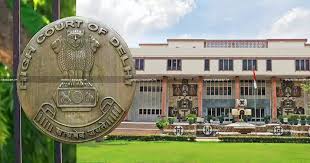
The Delhi High Court recently dismissed a writ petition, noting that it cannot invoke territorial jurisdiction to hear a matter against the Insolvency and Bankruptcy Board of India (IBBI) merely due to the fact that the IBBI had its presence in Delhi when the underlying Corporate Insolvency Resolution Process (CIRP) which formed the basis for the case arose in National Company Law Tribunal (NCLT) at Bengaluru.
Farooq Ali Khan, a suspended director of Associate Décor Limited a company undergoing CIRP before NCLT Bengaluru filed a formal complaint before IBBI under the Insolvency and Bankruptcy Board of India (Grievance and Complaint Handling Procedure) Regulations, 2017, alleging various irregularities by the Resolution Professional, in the discharge of his duties.
Following the complaint, IBBI initiated Show cause proceedings against the RP and the RP filed his reply before IBBI. Khan later approached the Delhi High Court contending that no progress had been made in those proceedings since.
Shivam Singh appeared for the petitioner and contended that since the respondent-IBBI authorities were situated in New Delhi, the entire cause of action for the petition arose within the jurisdiction of the Delhi High Court.
Apoorv Khator and Pooja Kumar appeared for IBBI.
Justice Purushaindra Kumar Kaurav found that the show cause proceedings against the RP were intricately connected with the CIRP proceedings and were pending before NCLTBengaluru.
Noting that the complaint and subsequent developments could not be separated from the underlying circumstances, the Court held that a comprehensive perusal of the facts indicated that the material, integral and substantial part of the cause of action arose outside the jurisdiction of the Delhi High Court.

The Court relied on its own decision in The Indure Pvt. Ltd. v. Government of NCT of Delhi (2026), which held that:
“merely because a decision-making authority happens to be in Delhi ought not to be the sole reason to entertain a lis, and that the act of giving a hearing or passing an order in Delhi is merely a consequence of the body being situated in the national capital, it has nothing to do with the offending action, the legal injury or the foundational facts.”
The Court accepted that the petitioner may be correct in contending that a part of the cause of action lies in New Delhi, however, as per the Supreme Court decision in Kusum Ingots & Alloys Ltd. v. Union of India and Anr. (2004), where a small part of the cause of action arises within the territorial jurisdiction of a High Court, that fact alone cannot be determinative, and the Court may decline to exercise discretionary jurisdiction by invoking the doctrine of forum conveniens.
The Delhi High Court thus relegated the petitioner to the jurisdictional High Court and dismissed the petition.
Support our journalism by subscribing to Taxscan premium. Follow us on Telegram for quick updates