FAO or JAO? Who Can Issue Income Tax Reassessment Notice: Full Explanation
The Finance Bill, 2026 steps in to settle the long-standing confusion over who can issue income tax reassessment notices.
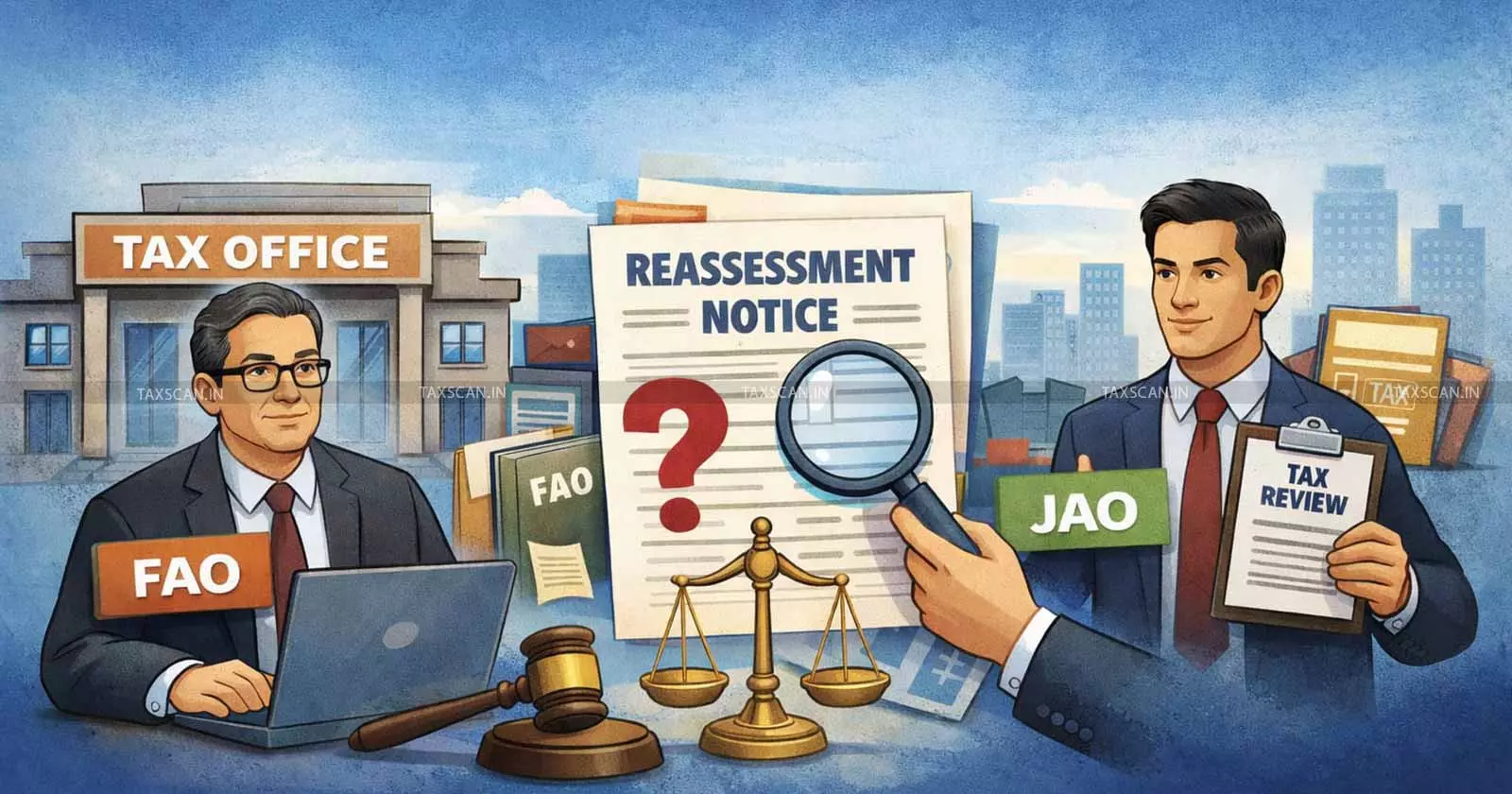
Income Tax Reassessment is not a routine query. A Section 148 notice can reopen a completed assessment if the department believes income escaped assessment. The law has strict steps and approvals, and the notice must come from the correct authority. If the notice comes from an authority who has no power under law, the whole reassessment becomes vulnerable. That is why taxpayers and tax teams check the issuing authority closely.
The reassessment framework after Finance Act, 2021
From 1 April 2021, reassessment has a “pre-notice” stage under Section 148A. The department must follow these steps before issuing a Section 148 notice:
First, the Assessing Officer may conduct an inquiry, with approval of the specified authority when required. Next, the Assessing Officer must issue a show cause notice with information that suggests escapement of income and must give an opportunity to respond. After the reply, the Assessing Officer must pass a reasoned order under Section 148A(3) on whether it is a fit case for Section 148 notice, again with approval of the specified authority.
These steps are not optional. They form the gatekeeping process before reopening.
Where the confusion started: faceless setup and reassessment
The Income Tax Act has a faceless assessment framework under Section 144B. It also has a provision for schemes under Section 151A. Portal-driven processes and faceless architecture led to situations where taxpayers received communications that appeared to come from the National Faceless Assessment Centre (NFAC) or an assessment unit, even in reassessment workflows.
This triggered legal disputes if a faceless centre or a faceless unit issues a Section 148 or Section 148A notice, is that valid? Or must the notice come only from the Jurisdictional Assessing Officer?
What Finance Bill, 2026 changes: new Section 147A
The Finance Bill, 2026 proposes to insert Section 147A after Section 147 in the Income-tax Act, 1961. The new section states that, for the purposes of Sections 148 and 148A, the term “Assessing Officer” means, and is deemed to have always meant, an Assessing Officer other than the National Faceless Assessment Centre or any assessment unit referred to in Section 144B(3).
This language is not soft. It uses “shall mean” and “shall always be deemed to have meant”. It also begins with a “notwithstanding” clause that overrides judgments, orders, decrees, Section 151A, and any scheme framed under it.
“147A. Notwithstanding anything contained in any judgement, order or decree of any court or in section 151A or in any scheme framed thereunder, for the removal of doubts, it is hereby clarified that the Assessing Officer for the purposes of sections 148 and 148A shall mean and shall always be deemed to have meant to be an Assessing Officer other than the National Faceless Assessment Centre or any assessment unit referred to in sub-section (3) of section 144B.”.
The Bill also says this amendment takes effect retrospectively from 1 April 2021.
The government’s stated purpose: “remove doubts”
The Explanatory Memorandum in the Bill explains the reason for this insertion. It records the faceless assessment framework, the reassessment power under Section 147, the notice requirement under Section 148, and the pre-notice safeguards under Section 148A. It then says Section 147A is proposed “to remove doubts” and to clarify that the Assessing Officer for Sections 148 and 148A is an Assessing Officer other than NFAC or any assessment unit under Section 144B(3).
So who can issue a reassessment notice: FAO or JAO?
1) JAO is the issuer for Sections 148 and 148A work
After this clarification, the reassessment machinery under Sections 148 and 148A sits with the regular Assessing Officer, which taxpayers often call the Jurisdictional AssessingOfficer (JAO). If the communication shows NFAC or an assessment unit as the issuing authority for the notice under Section 148 or the show cause under Section 148A, the taxpayer has a strong reason to question validity, because Section 147A excludes NFAC and assessment units for these sections.
2) What about “FAO” references?
In common tax discussion, “FAO” is used in two ways. Some mean “Faceless Assessing Officer”, others mean “Faceless Assessment Officer”. The Finance Bill text does not use the phrase “FAO”. It names NFAC and “any assessment unit” under Section 144B(3). So, if the issuing authority is NFAC or an assessment unit, that authority does not qualify as “Assessing Officer” for Sections 148 and 148A.
What taxpayers should check on a Section 148 / 148A notice
When you receive a reassessment communication, check these items in the notice PDF and on the portal:
First, identify the section: 148A(b) show cause, 148A(3) order or 148 notice. Next, check the issuing office and designation. If the notice is issued in the name of NFAC or an assessment unit, Section 147A creates a direct conflict.
Also track the approval references because Section 148A actions require prior approval of the specified authority, and the Bill’s explanation repeats that approval requirement.
What this means for ongoing disputes and older notices
Because Section 147A is drafted with retrospective effect from 1 April 2021, it aims to govern disputes for the entire post-2021 reassessment regime.
The “notwithstanding” opening also signals that the legislature wants this meaning to apply even if a court order took a different view in some case fact pattern.
Reassessment workflows will need clean role separation: faceless infrastructure can exist for processing but the legal identity of the “Assessing Officer” for Sections 148 and 148A must remain outside NFAC and outside the Section 144B(3) assessment units.
A quick note on a response-based compliance
Budget 2026 proposals also push response-driven compliance routes, such as updated returns in response to reassessment notices in the new Income-tax Act, 2025 framework (Section 280 notice) with defined additional tax impact.
Conclusion
Who can legally issue the reassessment notice? For Sections 148 and 148A, the “Assessing Officer” is an Assessing Officer other than NFAC and other than any assessment unit under Section 144B(3).
Support our journalism by subscribing to Taxscan premium. Follow us on Telegram for quick updates