

Female Labour Force Participation Rises Sharply, says Economic Survey
Increased in Female Labour Force Participation rate Reported in Annual PLFS report 2023-24
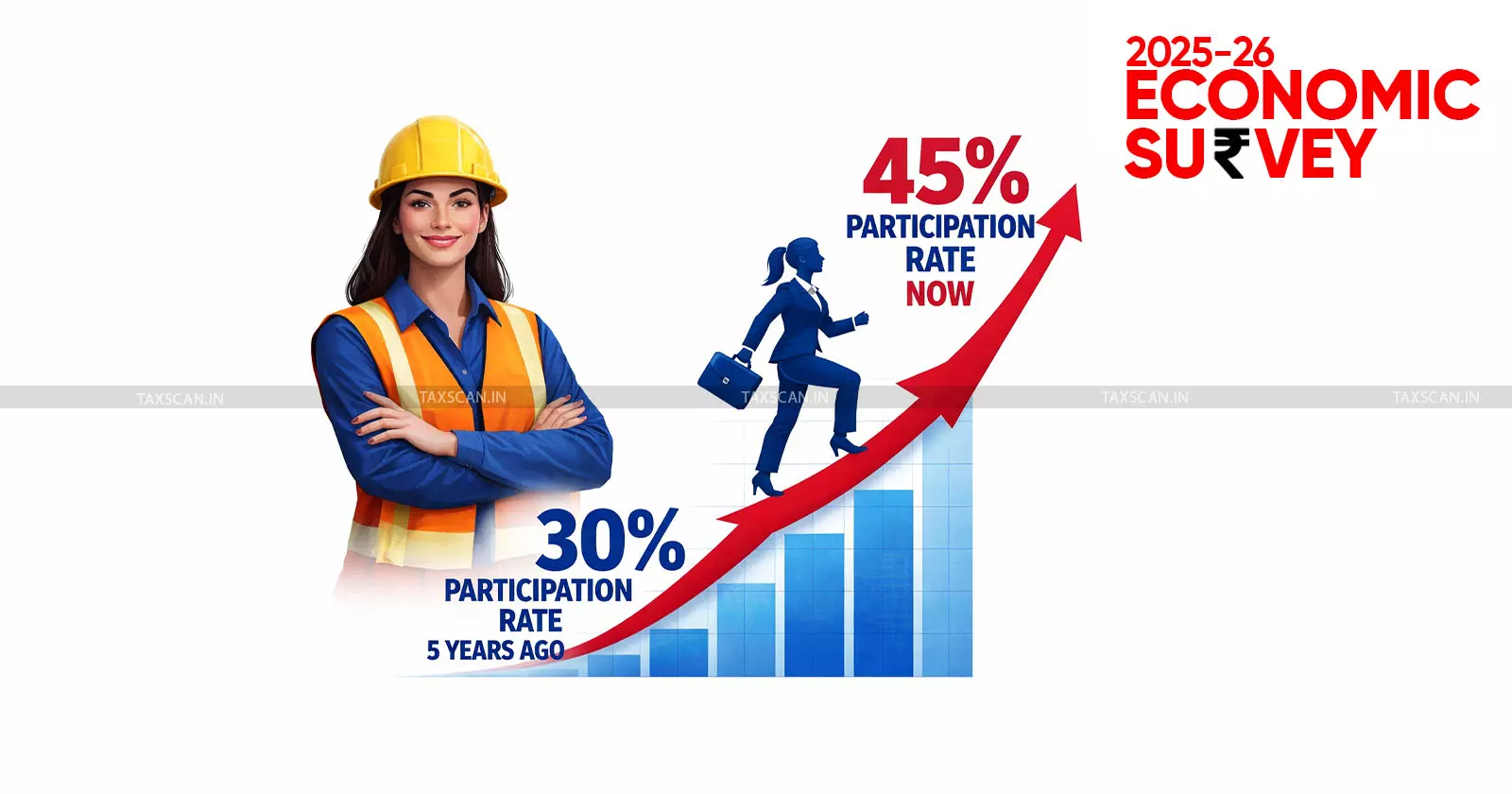
As per the Economic Survey 2025-26, there has been a huge rise in female labour force participation over the years. In 2017-18, the female labour force participation rate was 23.3%, which increased to 41.7% in 2023-24. There is an increase of 18.4% points over six years.
At the same time, the female unemployment rate declined from 5.6% in 2017-18 to 3.2% in 2023-24. This indicates that not only are more women entering the labour force, but a higher proportion of women secures employment.
Economic survey 2025-26, highlights that 29 existing labour laws were consolidated into four Labour Codes, as the Code on Wages, 2019, the Code on Social Security, 2020, the Industrial Relations Code, 2020, and the Occupational Safety, Health and Working Conditions Code, 2020.
These Codes contain specific provisions supporting women in the workforce, including the provision of crèches, enabling night shifts, expansion of maternity benefits, flexible work arrangements, formal recognition of gig workers, and portability of benefits through the Universal Account Number. Such measures help reduce structural barriers faced by women in the workplace.
The survey also points out various initiatives undertaken by State Governments to promote women’s workforce participation. These include Sakhi Niwas under the Ministry of Women and Child Development and the Thozhi Hostel scheme in Tamil Nadu.
In addition, urban mobility and safety initiatives such as the Kochi Women Police Control Room, Hyderabad SHE Teams, and Chennai’s inclusive street design framework provide ecosystem-level support for women.
Moreover, several statutory restrictions have been removed, 17 states and union territories removed the prohibition and permitted women to work in hazardous industries, 22 states and union territories permitted women for night work in factories, and 33 states and union territories allowed night work in commercial establishments.
