

From Caracas to New Delhi: How Venezuela Regime Crisis could Impact India’s Taxes and Oil Imports
Despite limited oil trade, tensions in Venezuela’s oil sector can potentially shape India’s crude oil-related trade decisions
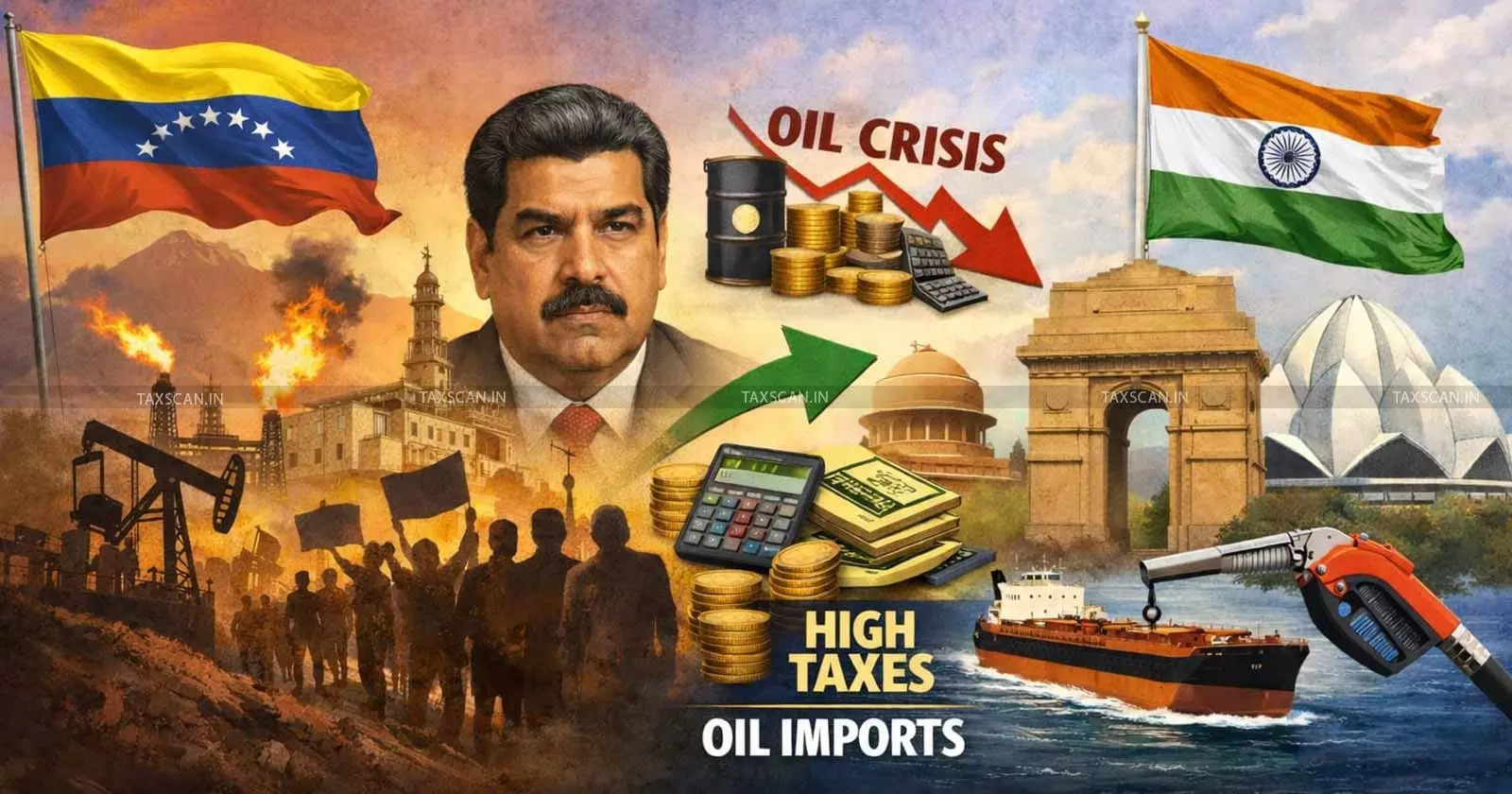
In a recent military operation, the U.S. forces captured Venezuelan President Nicolás Maduro and his wife, Cilia Flores. The couple was then taken to the United States on criminal charges. Venezuela is known to hold the largest proven crude oil reserves in the world.
While India’s direct trade with Venezuela has declined in recent years, official data from the Ministry of Commerce & Industry show that imports and exports continue at a small scale. In FY 2024‑25, India’s total imports from Venezuela were approximately USD 364.5 million, with crude oil accounting for roughly USD 255.3 million.
In this light, let’s examine the implications for India’s crude oil imports and fuel taxes.
India’s Crude Import Basket and Fiscal Implications
India meets close to 85% of its crude oil demand through imports. According to official data from the Ministry of Commerce & Industry and Petroleum Planning & Analysis Cell (PPAC), India imported roughly 243 million tonnes of crude oil in FY 2024‑25. Russia accounted for around 36 % of India’s crude imports, while OPEC countries collectively supplied more than half.
Official data showing the ranking of India’s major crude suppliers in 2024 alongside import value:
Major Sources of India’s Crude Oil Imports (2024)
| Country | Approx. Import Value (USD) |
| Russia | ~USD 52 billion |
| Iraq | ~USD 28.6 billion |
| Saudi Arabia | ~USD 19.3 billion |
| United Arab Emirates | ~USD 13.7 billion |
| United States | ~USD 5 billion |
| Nigeria | ~USD 4 billion |
| Angola | ~USD 3.6 billion |
| Kuwait | ~USD 3.4 billion |
| Venezuela | ~USD 1.8 billion |
From a revenue perspective, global oil prices directly affect India’s tax receipts. Petrol and petroleum products, being Non-GST items, fall outside the Goods and Services Tax framework. However, petrol is subject to customs duties under the Customs Act, 1962, central excise under the Central Excise Act, 1944, and state VAT laws. Fuel taxes are adjusted to manage government revenue and inflation, and these changes are further taken into account for Union Budget estimates and fiscal deficit calculations. This is why even minor fluctuations in crude oil prices can influence customs duty and excise.
Price Volatility and Fiscal Sensitivity
The recent developments in Venezuela and the power-shuffle that will follow can potentially influence global supply chains. Global equity markets, including India’s, have reacted sensitively to developments in Venezuela. Oil prices will continue to face volatility in the coming weeks.
Even though India’s dependence on Venezuela for supply of crude oil is not very significant, the ongoing tensions may impact domestic fuel costs, transportation, and production-related expenses. India’s oil purchase from Russia has concerned the U.S. and Donald Trump since quite some time, and fresh threats of higher tariffs have once again posed a diplomatic dilemma to India and its trade decisions. The key takeaway for tax and policy watchers is that India’s fiscal framework remains closely aligned with crude oil price fluctuations.
Support our journalism by subscribing to Taxscan premium. Follow us on Telegram for quick updates
