

GSTAT Procedure Rules, 2025: What Tax Practitioners Must Know before Filing Appeal
The GSTAT Procedure Rules, 2025, establish a comprehensive procedural framework governing the institution, hearing, and disposal of appeals before the Goods and Services Tax Appellate Tribunal, covering everything from e-filing to disposal
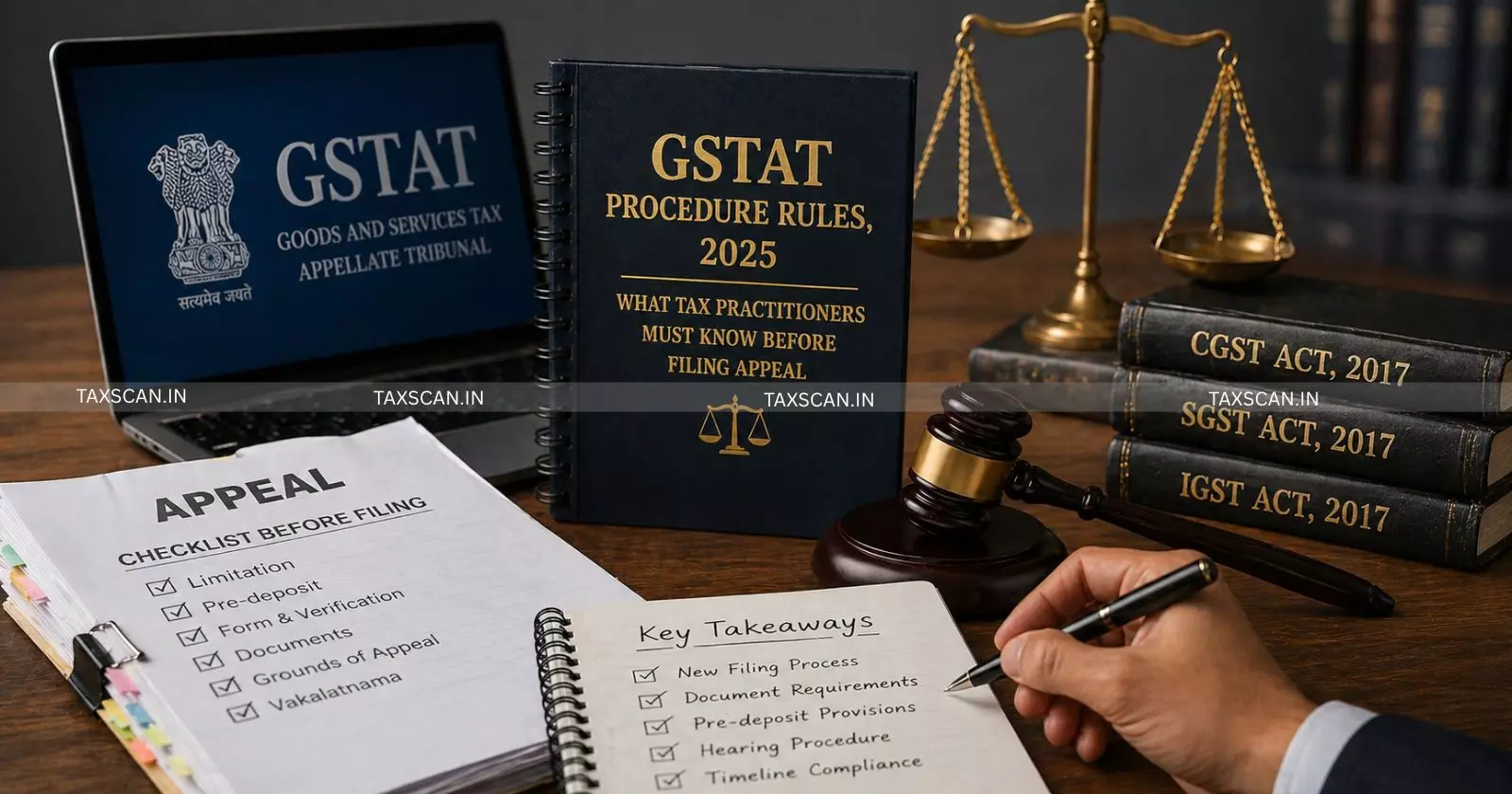
The Goods and Services Tax (GST), introduced on July 1, 2017, created a unified tax regime jointly administered by the Center and the States. The Goods and Services Tax Appellate Tribunal (GSTAT) was formed under Section 109 of the CGST Act, 2017, and functions as the second tier of appeal in the GST dispute resolution hierarchy, reviewing appeals against orders passed by the first appellate authority under both the central and state or union territory GST legislations.
Background of the GSTAT (Procedure) Rules, 2025:
On April 24, 2025, the Ministry of Finance notified the Goods and Services Tax Appellate Tribunal (Procedure) Rules, 2025, under Section 111 of the CGST Act, 2017. It consists of 124 rules and 15 chapters that prescribe the complete procedural framework for appeals, from filing an appeal to the pronouncement of final orders before the GSTAT.
With over 31 state benches and the Principal Bench in New Delhi now fully operational, the GSTAT has solidified its position as India’s appellate court for GST. This article highlights what tax professionals must keep in mind to navigate this judicial machinery effectively.
Structure of Rules:
| Chapter | Title | Key Provisions |
| I | Preliminary | Definitions, short title, and commencement provisions |
| II | Powers and Functions | Judicial and administrative powers of the tribunal |
| III | Institution of Appeals | Procedure for filing and processing appeals |
| IV | Cause List | Preparation and publication of the cause list |
| V | Hearing of Appeal | Procedures to be followed during hearings |
| VI | Record of Proceedings | Maintenance of order sheets and related records |
| VII | Maintenance of Registers | Registers to be kept for proceedings |
| VIII | Inspection of Record | Procedure for inspecting tribunal records |
| IX | Appearance of Authorised Representative | Who is permitted to appear before the tribunal |
| X | Affidavits | Format and verification requirements for affidavits |
| XI | Discovery, Production, and Return of Documents | Handling of documents in proceedings |
| XII | Examination of Witnesses and Issue of Commissions | Witness examination and issuance of commissions |
| XIII | Disposal of Cases and Pronouncement of Orders | Final disposal of cases and pronouncement of orders |
| XIV | Electronic Filing and Processing, Hybrid Proceedings | E-filing and hybrid hearing mechanisms |
| XV | Miscellaneous | Other provisions not covered by preceding chapters |
Filing of Appeals:
Mandatory Electronic Filing-
The most significant shift in the past year has been the transition to the GSTAT e-filing portal, which is now fully operational. Every appeal must be filed online in Form APL-05 on the GSTAT Portal (Rule 18).
What the appeal must contain:
● Cause title with full names and addresses of all parties
● Details of the impugned order, including date, order number, and issuing authority
● Grounds of appeal in consecutively numbered paragraphs, each containing a separate fact or allegation
● Relief sought, specifically worded
● Signature and verification by the appellant or authorised representative
● Where a single order covers multiple show cause notices (SCNs), refund claims, or demands, one appeal suffices
● Where one order affects multiple persons, each aggrieved person must file a separate appeal
System Timestamps and Electronic Services:
Rule 115 made electronic filing mandatory and emphasized the importance of digital uploads. The hearings can be held in hybrid mode, thus making it more accessible to people.
System Timestamps (Rule 19): The "Date of Presentation" is no longer when you hit "submit" but when the system generates the successful upload timestamp.
Electronic Service (Rule 34): The automatic transmission of appeals to the Respondent Commissioner means the "service of notice" is instantaneous. Practitioners must monitor their registered emails and portal dashboards for updates.
Important Timelines and Financials for GSTAT Compliance:
- Filing Deadlines
● Legacy Appeals: June 30, 2026, is the cutoff for filing "legacy appeals" for orders passed between January 2017 and January 2022.
● Standard Filing Deadline: For all new orders, the appeal must be filed within 3 months of the date the appellate or revisional authority order is communicated to you. (S.112 of CGST act)
- Hearing Procedure and Conduct of Proceedings
● Adjournment Restriction: Under Rule 47, the Tribunal generally limits parties to a maximum of three adjournments, emphasizing the need for readiness on every hearing date.
- Grounds for appeal: All grounds to be included in the appeal form; additional grounds may be raised only with the Tribunal's leave (Rule 31)
- Hearing Procedure: At the hearing, the appellant argues first, followed by the respondent, with a rejoinder permitted thereafter (Rule 41). Even ex parte proceedings are possible on non-appearance (Rules 42, 43).
● Language: English is the language of the tribunal. Documents in a vernacular language must have a certified English translation. (Rule 23).
- Pronouncement of Orders
- Orders must be pronounced within 30 days of the final hearing (Rule 103). Errors may be rectified within one month from date of final order for rectification (Rule 107)
- Sitting Hours of Bench
Ordinarily from 10:30am to 01:30pm and from 02:30pm to 4:30pm. (Rule 8)
Some Forms Prescribed under GSTAT (Procedure) Rules, 2025:
| Action | Form / Rule | Key Deadline / Requirement |
| Filing Main Appeal | FORM GST APL-05 | Within 3 months of the OIA/Revisional Order |
| Filing Cross-Objections | FORM GST APL-06 | Within 45 days of receipt of notice of appeal |
| Interlocutory Application | GSTAT FORM-01 | Filed with or after the main appeal. Used for a stay of demand, condonation of delay, or additional evidence. Fee of ₹5,000 per application |
| Order Sheet | GSTAT FORM-02 | Maintained by the court officer to record every stage of the proceeding. |
| Inspection of Record | GSTAT FORM-03 | Fee of ₹5,000 per application |
| Authorization /Appearance | GSTAT FORM-04 | Must be on record before the first hearing |
The GSTAT Procedure Rules, 2025, have transformed GST litigation into a structured, digital process. For tax professionals, mastering e-filing, hybrid hearing procedures, and new timelines is essential for effective representation before the GSTAT. Practitioners should focus on proactive digital diligence and become familiar with the procedural technicalities to successfully navigate the GSTAT.
Support our journalism by subscribing to Taxscan premium. Follow us on Telegram for quick updates
