

Impact and Trickle-Down Effect on Indian Economy: Iran-US War
Rising Oil Prices and Trade Disruptions Threaten Economic Stability
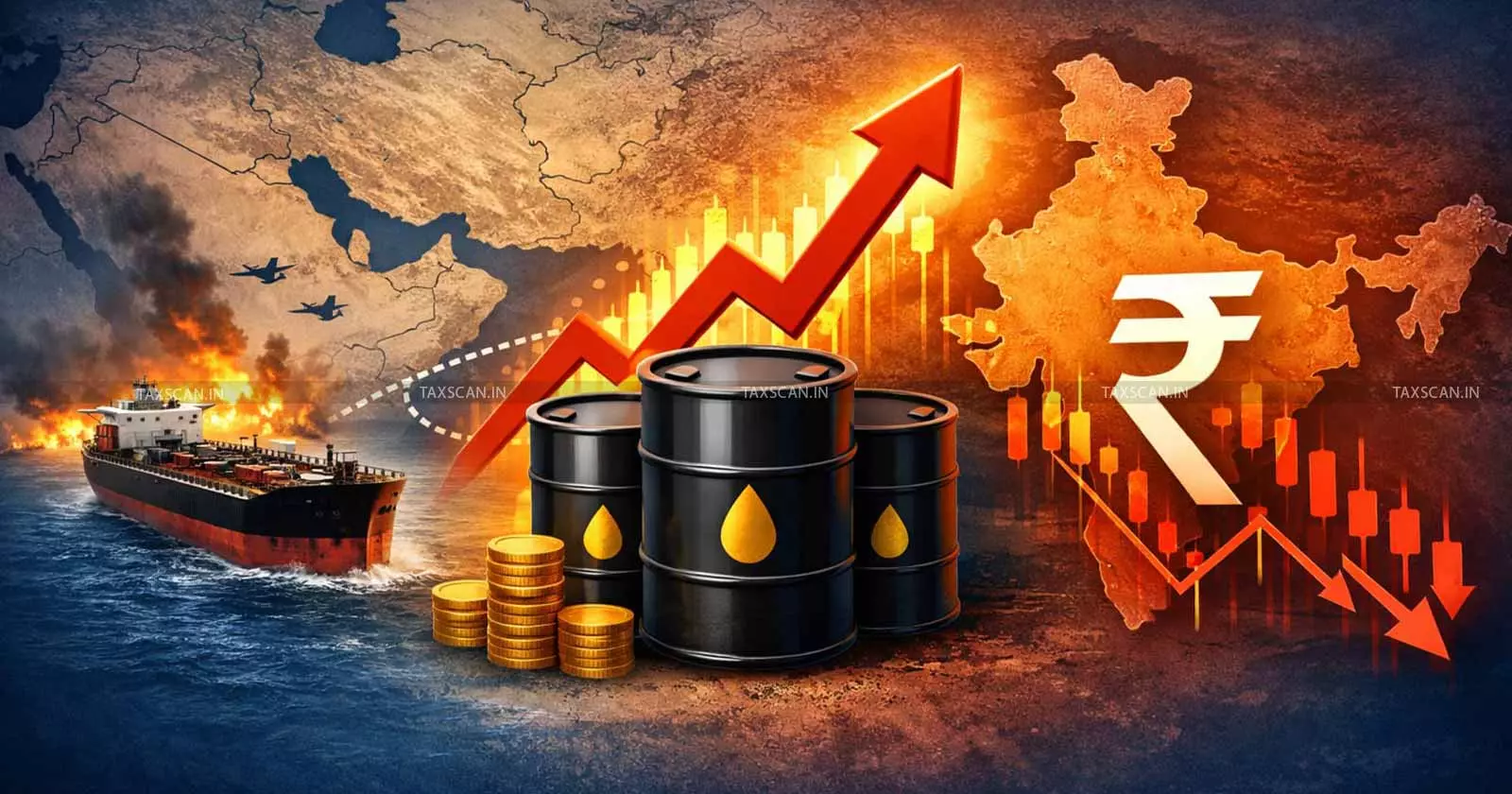
The Government of India has expressed concern over the escalating conflict between the United States (US) and Iran, stating that the ongoing hostilities in the Middle East could have significant economic consequences for the country.
The warning comes amid growing fears that continued military confrontation may disrupt global energy supplies, trade routes, and the safety of Indian nationals working in the Gulf region.
The Ministry of External Affairs (MEA) emphasised that continued violence and destruction in the region could adversely affect not only the Middle East but also economies that are closely linked to the region through energy imports and trade relations.
The Indian government has also raised concerns over nearly one crore Indian citizens who live and work in the Gulf region. It has emphasised that any major disruption in the region could have serious consequences for the Indian economy.

Impact on Oil Costs
India is heavily dependent on the Middle East for crude oil imports. A substantial portion of India’s energy needs is fulfilled by countries in the Gulf region, making the stability of the region crucial for the country’s economic security.
The Middle East accounts for 17% of India’s exports, 55% of crude oil imports, and 38% of worker remittances. Any disruption in oil production or shipping routes could lead to a surge in global crude prices, which may in turn increase fuel costs, widen the current account deficit, and exert inflationary pressure on the Indian economy.
A significant portion of the global oil supply passes through the Strait of Hormuz and any disruption in this passage could impact global energy markets, resulting in supply shortages. For India, which imports a major share of its crude oil through these routes, such disruptions could have immediate economic implications.
The Middle East represents an important trading partner for India. The region accounts for a significant share of India’s exports, including petroleum products, food items, and other commodities.

Increases in price of $10 for each barrel global crude oil prices could significantly affect India’s macroeconomic stability. According to Mumbai-based brokerage Emkay Global Financial Services, such an increase may widen India’s current account deficit (CAD) to GDP ratio by nearly 0.5%.
The brokerage further noted that rising oil prices could also increase retail inflation by up to 35 basis points. In addition to inflationary pressures, higher crude prices may also impact economic growth, reducing India’s GDP growth by around 15-20 basis points.
Escalating tensions and military hostilities may disrupt shipping activities, delay cargo movement, and increase freight costs, thereby affecting trade flows between India and the Gulf region.
Concern for Indian Citizens
Another major concern for India is the safety of its citizens living and working in the Middle East. It is estimated that nearly one crore Indians reside in various Gulf countries, contributing significantly to India’s economy through remittances.
Rising tensions and economic instability in the Middle East could impact the remittances that India receives from workers in the region, while also putting businesses at risk.
There is growing uncertainty for nearly 10 million Indian workers in the Middle East, according to government data, many of whom send earnings back home. These remittances play an important role in strengthening household finances and serve as a major source of foreign currency inflows into India.
The Indian government has stated that it is closely monitoring the situation and remains in contact with authorities in the region to ensure the safety and well-being of Indian nationals. Diplomatic channels are also being used to assess the evolving situation and prepare contingency measures if required.
Financial Markets
Apart from energy and trade implications, the geopolitical tensions have also begun to influence financial markets. Rising uncertainty surrounding the conflict has contributed to volatility in global markets, including fluctuations in currency values.
India’s economy is currently expanding at 7.6% in the current financial year, according to data released by the Government of India. However, prolonged geopolitical tensions in the Middle East could pose risks to economic stability through higher oil prices, trade disruptions, and financial market volatility.
Conclusion
It can be concluded that the escalating conflict between the US and Iran highlights interconnected global economies. For India, which maintains strong economic, energy, and labour linkages with the Middle East, prolonged instability in the region could have far-reaching consequences.
Rising crude oil prices, disruptions in trade routes, and uncertainty surrounding remittances from Indian workers in the Gulf region may collectively exert pressure on the country’s economic stability.
Support our journalism by subscribing to Taxscan premium. Follow us on Telegram for quick updates
