Income Tax Assistant Took ₹600 Bribe in 2011: Patna HC Upholds 1-Year Imprisonment in 2025 [Read Order]
The income tax assistant had been nabbed by a trap operation conducted by the CBI.
![Income Tax Assistant Took ₹600 Bribe in 2011: Patna HC Upholds 1-Year Imprisonment in 2025 [Read Order]](https://images.taxscan.in/h-upload/2026/01/01/2116567-income-tax-assistant-took-600-bribe-2011-patna-hc-upholds-1-year-imprisonment-2025-taxscan.webp "Income Tax Assistant Took ₹600 Bribe in 2011: Patna HC Upholds 1-Year Imprisonment in 2025 [Read Order]")
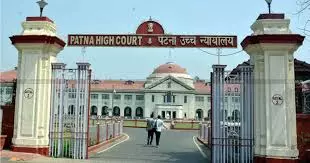
The Patna HighCourt recently upheld an imprisonment conviction and sentence of an Income Tax Assistant who was found guilty of demanding and accepting a bribe of ₹600 in 2011 for processing an income tax refund of a mere ₹5,826.
The decision was given by the Patna High Court against an appeal filed by Ram Narayan Singh against the judgment of conviction and order of sentence dated November 29, 2024, which was passed by the Special Judge (CBI)-I, Patna.
Singh had earlier been convicted under Section 7 and Section 13(2) read with Section 13(1)(d) of the Prevention of Corruption Act, 1988 for seeking illegal gratification, acceptance
thereof and recovery of tainted money while discharging his duties as a public servant employed with the income tax department.
The facts of the case follow a complaint filed in March 2011 before the Superintendent of Police - CBI in Patna. The complainant, a field worker employed with Sahara India, alleged that tax had been deducted from his commission income for the financial year 2008-09. The complainant stated that his total income for the relevant assessment year was ₹50,905 and that he had filed his income tax return seeking a refund of ₹5,826.
Despite recurrent visits to the Income Tax Office seeking his refund, the same was never processed. At this juncture, it was alleged that the appellant who was then posted as a Tax Assistant, demanded ₹600 as illegal gratification from the complainant for clearing the refund.
The CBI on being made privy of the happenings, verified the complaint and registered a formal FIR and organised a trap.
During the trap proceedings, the complainant and an independent shadow witness approached the appellant, whereupon the demand was reiterated and the bribe-currency which was treated with phenolphthalein was accepted. The trap team recovered the bribe amount soon thereafter, and chemical tests on the hand-wash samples of the accused pointed towards his acceptance of the bribe money.
During the trial, the prosecution examined twelve witnesses, including the complainant, independent witnesses, trap team members, and the investigating officer, and produced documentary and material evidence such as the sanction for prosecution, recovery memoranda, income tax records and forensic reports.
The counsel for the tax assistant denied the allegations and argued that he had no official role in processing the refund. However, the trial court found that the evidence on demand, acceptance and recovery was consistent and reliable.
He was sentenced to six months’ rigorous imprisonment under Section 7 and one year’s rigorous imprisonment under Section 13(2), with both sentences directed to run concurrently, along with an aggregate fine of ₹5,000.
Before the High Court, the appellant challenged the trial court’s judgment on multiple grounds, especially contending that he was not entrusted with the work of processing income tax refunds of the concerned ward of the complainant and that the prosecution case suffered from material inconsistencies, particularly in the testimony of the complainant regarding the timing of the complaint and registration of the FIR.
Opposing the appeal, counsel for the CBI submitted that the prosecution has proved all the essential ingredients of offence, namely demand of illegal gratification, acceptance thereof and recovery of tainted money and all mandatory requirements under the Prevention of Corruption Act have been strictly proved.
After examining the trial court record and evaluating the evidence of prosecution witnesses, Justice Alok Kumar Pandey held that the pleas raised by the defence were untenable.
Accordingly, the High Court dismissed the appeal, holding that the essential ingredients of the offences were proved beyond reasonable doubt and that the presumption under Section 20 of the Prevention of Corruption Act remained unrebutted.
The High Court affirmed the conviction of the appellant under Sections 7 and 13(2) read with Section 13(1)(d) of the Prevention of Corruption Act and upheld the sentence of six months’ rigorous imprisonment with a fine of ₹2,500 under Section 7 and one year’s rigorous imprisonment with a fine of ₹2,500 under Section 13(2), with both sentences directed to run concurrently.
The bail of the appellant was also cancelled and he was directed to surrender forthwith to serve out the sentence, thereby bringing to a close criminal proceedings arising from the 2011 bribery incident after nearly fourteen years.
Support our journalism by subscribing to Taxscan premium. Follow us on Telegram for quick updates