Income Tax Draft Rules 2026: New Limits Proposed for Employer Benefits Like Loans, Gifts and Free Meals
Income Tax Draft Rules 2026 propose revised perquisite valuation limits for employer benefits such as loans, gifts, and free meals.
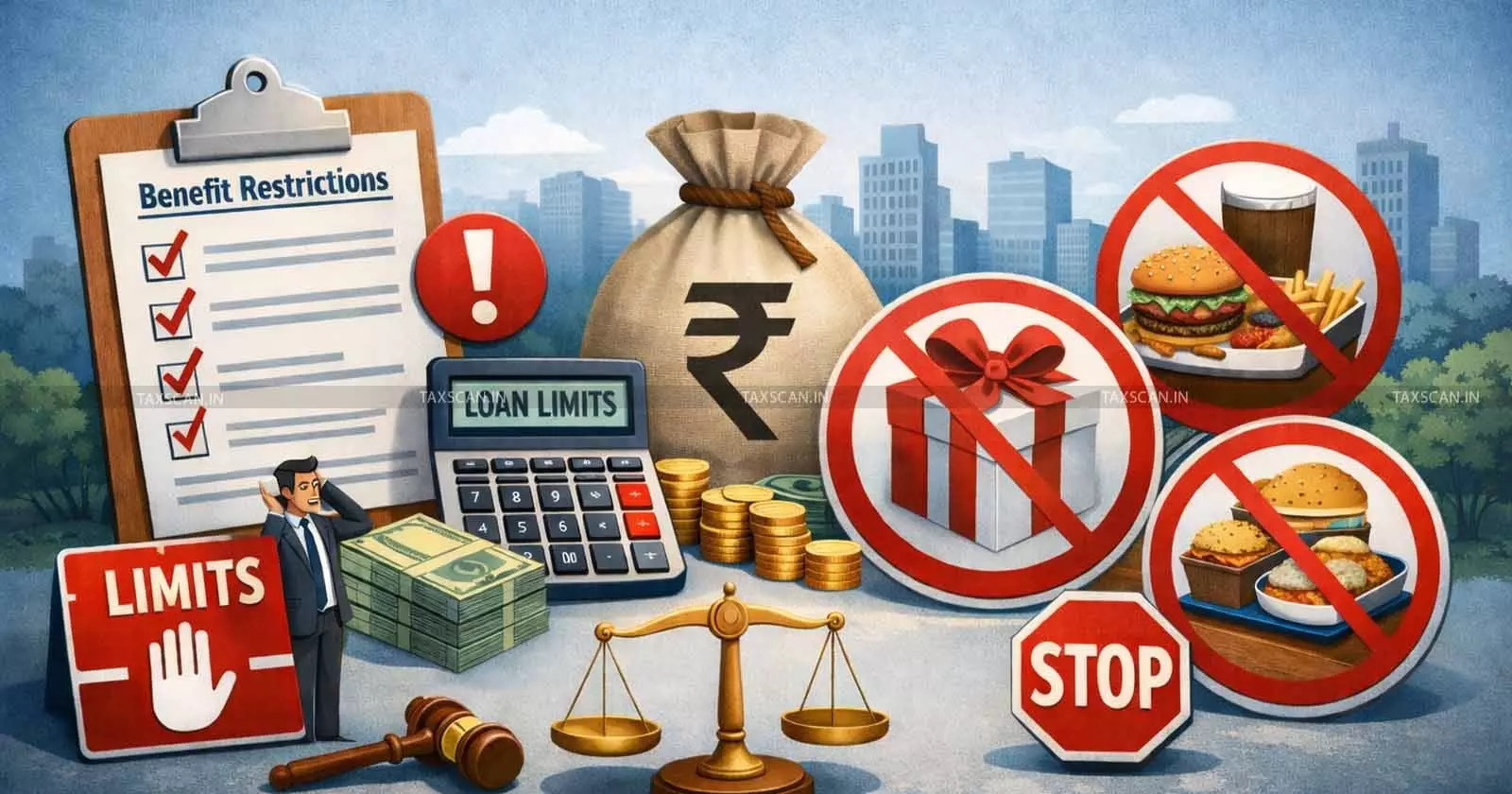
Employer-provided benefits form a major part of salary packages in India. These benefits include interest-free loans, festival gifts, meal support at office and many other facilities such as company cars and employer-provided housing.
Under income-tax law, such benefits fall under perquisites and get taxed as part of salary income. The Draft Income-tax Rules, 2026 bring these items under Rule 15: Valuation of perquisites.
Rule 15 sets the method to calculate the taxable value of benefits that an employer provides to an employee or to members of the employee’s household.
This topic matters for two groups:
- Employees because taxable perquisite value increases taxable salary and tax deduction at source (TDS).
- Employers and payroll teams because valuation rules decide payroll reporting, Form 16 numbers, and TDS deposits.
The draft rules restate many existing principles from the Income-tax Rules, 1962, but they also update several key limits and fixed valuation numbers. These updates change tax outcomes for many salaried taxpayers.
Where the draft rules talk about these benefits
The benefits in this topic loans, gifts, and free meals are listed in Rule 15(5)(a), Table IV of the Draft Income-tax Rules, 2026.
Table IV covers “other benefits or amenities” and includes:
- Interest-free or concessional loan (Sl. No. 1)
- Free food and non-alcoholic beverages (Sl. No. 3)
- Gift, voucher, or token (Sl. No. 4)
These items directly match common salary perks in India.
Employer loans: how the taxable value is calculated
Draft Rules 2026 method
If an employer gives an employee an interest-free loan or a loan at concessional interest, the taxable perquisite value is not the full loan amount. The taxable value is based on the interest benefit.
Under Rule 15 Table IV, the taxable value is computed as:
- Interest calculated at the State Bank of India (SBI) rate for a similar loan purpose
- Applied on the maximum outstanding balance for each month
- Reduced by interest, if any, paid by the employee
This approach requires payroll teams to track month-wise loan balances and apply the correct SBI rate.
Exemptions for employer loans
The draft rules provide two clear cases where the taxable value is nil:
- Loans for medical treatment for diseases specified in Rule 18
- Loans not exceeding Rs 2,00,000 in total
This relief matters for employees who take small salary advances or short-term employer loans.
Comparison with the 1962 Rules
This loan framework follows the long-standing structure under the Income-tax Rules, 1962. The Draft Rules, 2026 keep the same approach and keep the Rs 2,00,000 relief.
Gifts and vouchers: exemption threshold increases
Draft Rules 2026 position
Rule 15 Table IV states that gifts, vouchers, and tokens given by an employer are taxable as perquisites. The taxable value is the amount of such gift.
The draft rules then provide a major relief:
- Taxable value is nil if the value is below Rs 15,000 in total during the tax year
This rule applies to common employer practices such as:
- Festival gift vouchers
- Spot awards
- Gift cards
- Non-cash rewards
What the 1962 Rules say
Under the Income-tax Rules, 1962, the comparable threshold is much lower:
- Taxable value is nil only if gifts and vouchers are below Rs 5,000 in total during the year
What this change means for employees
This change gives employees a wider tax-free cushion for small and medium employer rewards. If an employee receives vouchers worth Rs 12,000 across the year, the full amount stays outside taxable salary under the draft rule.
If the total crosses Rs 15,000, the valuation rule requires taxation based on the gift value.
What this change means for employers
Employers must track the total value of all gifts, vouchers, and tokens given to each employee during the year. Without tracking, payroll can under-report perquisites and create Form 16 mismatches.
Free meals: per-meal limit increases
Draft Rules 2026 position
Rule 15 Table IV covers free food and non-alcoholic beverages. The general rule is:
- Taxable value equals employer expenditure minus employee contribution
But the draft rule lists situations where this provision does not apply.
One major relief covers meals provided during working hours. Under the draft rules:
- Free food during working hours at office or business premises, or through paid vouchers usable at eating joints, is not taxed to the extent the value does not exceed Rs 200 per meal
The draft rule also keeps other exclusions:
- Tea or snacks during working hours
- Meals provided in a remote area or at an off-shore installation during working hours
What the 1962 Rules say
The older rules contain the same structure, but the per-meal exemption limit is:
- Rs 50 per meal
Why this matters
In modern salary structures, meal cards and subsidised office cafeterias often exceed Rs 50 per meal. The Rs 200 per meal threshold aligns with present-day costs and reduces taxable perquisite value for many employees.
For employers, this change requires payroll systems to apply the Rs 200 per meal cap when meal vouchers or canteen subsidies are provided.
Why the draft rules lead to stricter compliance
Many employees and employers treat perquisites as small salary add-ons. The Draft Rules, 2026 show that the tax system treats them as structured taxable items with defined valuation.
Rule 15 provides a detailed framework that payroll teams must apply across the year. Once this framework is adopted, perquisite reporting becomes harder to ignore because:
- Valuation rules are fixed
- Exemption limits are explicit
- Month-wise tracking is required for loans
- Aggregation is required for gifts
This shifts perquisites from informal salary benefits into formal tax compliance items.
Other major perquisite changes in Draft Rule 15
Even though this topic focuses on loans, gifts, and meals, Rule 15 also changes other high-impact perquisites that affect senior employees and large employers.
Company car perquisite values rise
The draft rule increases fixed monthly perquisite values for employer-provided cars used for personal purposes, including a separate add-on for chauffeur. The older rules use much lower fixed amounts.
This change increases taxable salary for employees who use employer cars for mixed official and personal use.
Employer-provided accommodation slabs and census base change
The draft rules adjust salary percentage slabs and shift population cut-offs to the 2011 census framework instead of the older census base.
This change affects employees in large cities where employer-provided housing is common.
Practical checklist for employees and payroll teams
For employees
- Check Form 16 for perquisite reporting and valuation.
- Track total gift and voucher value received during the year.
- Understand meal voucher value per meal and the employer’s per-meal reporting method.
- Review loan terms and interest charged, if any.
- Maintain year-wise gift and voucher tracking for each employee.
- Apply the Rs 200 per meal cap for meal vouchers and canteen benefits.
- Track each-month maximum outstanding loan balances and apply SBI rates for valuation.
- Ensure perquisite values flow correctly into Form 16 and TDS computations.
For employers and payroll teams
- Maintain year-wise gift and voucher tracking for each employee.
- Apply the Rs 200 per meal cap for meal vouchers and canteen benefits.
- Track each-month maximum outstanding loan balances and apply SBI rates for valuation.
- Ensure perquisite values flow correctly into Form 16 and TDS computations.
Support our journalism by subscribing to Taxscan premium. Follow us on Telegram for quick updates