Income Tax Forms 138 & 140 Replace 24Q & 26Q: New TDS Reporting Rules for Salary and Non-Salary Payments
New Forms 138 and 140 replace 24Q and 26Q, bringing a revised system for TDS reporting on salary and non-salary transactions
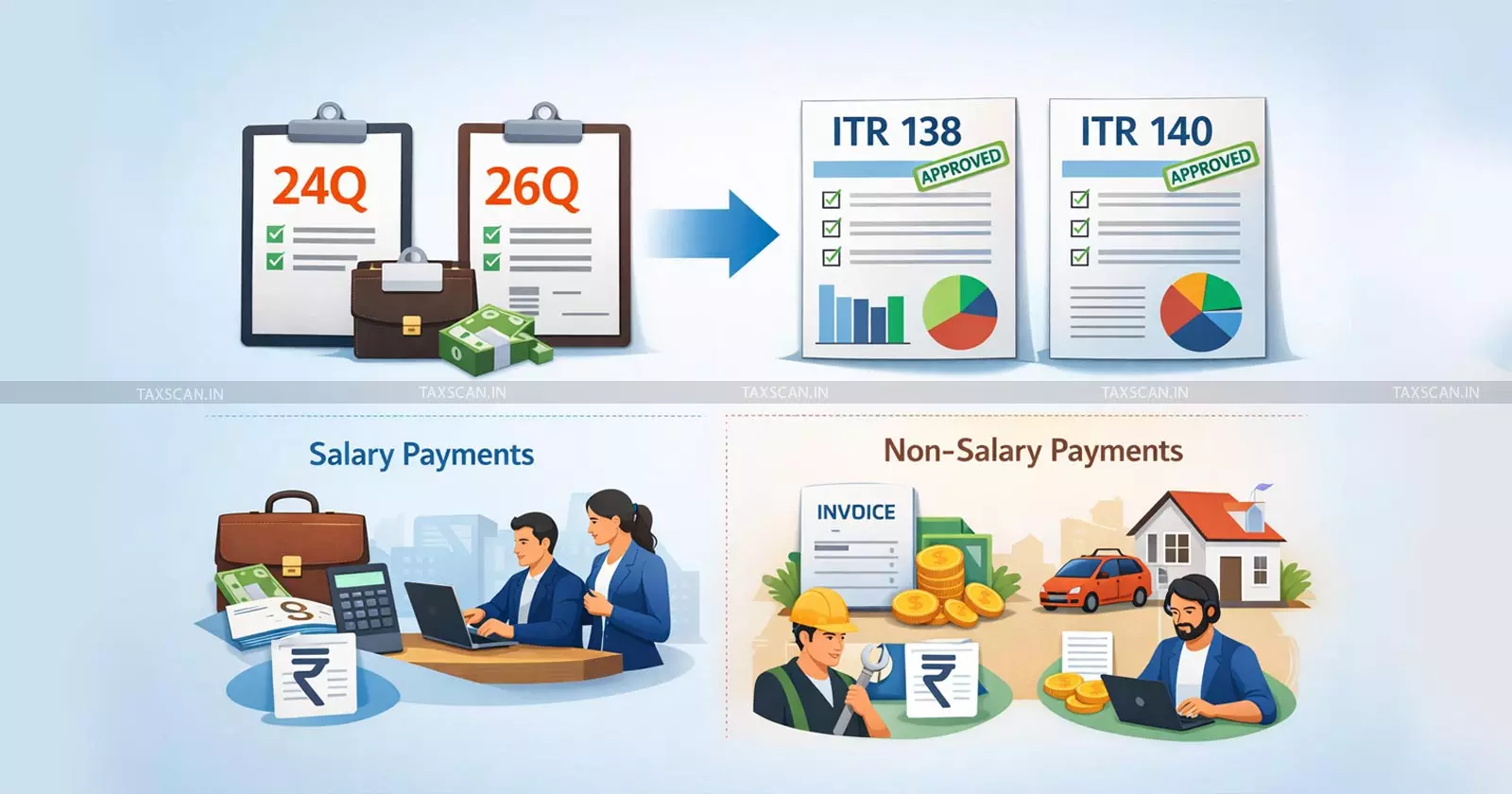
The Income Tax Rules, 2026 have introduced Form No. 138 and Form No. 140 to replace the earlier Forms 24Q and 26Q used for quarterly TDS reporting on salary and non-salary payments. These earlier forms saw massive usage, with around 22.5 lakh Form 24Q and 50 to 55 lakh Form 26Q filings each year. The new forms aim to reduce compliance burden, improve reporting accuracy, and strengthen the tax system for both deductors and taxpayers.
The new forms will apply from April 1, 2026 and form part of a broader effort to simplify tax procedures and improve ease of compliance.
Purpose of the New Forms
Form No. 138 is a quarterly statement filed by employers to report tax deducted at source on salary paid to employees under section 392. It also includes reporting of income of specified senior citizens in certain cases.
Form No. 140 is a quarterly statement filed by deductors other than employers. It covers tax deduction on payments such as interest, commission, brokerage, rent, professional fees, and other specified payments made to residents under various provisions of the law.
Both forms serve as a key mechanism to ensure that tax deducted at source is reported correctly and credited to the taxpayer.

Who Must File These Forms
Every person responsible for making payments to a resident where tax deduction is required must file these forms.
- Employers must file Form No. 138 for salary payments.
- All other deductors must file Form No. 140 for non-salary payments.
Structure of the Forms
Both forms follow a similar structure with two main parts.
Part A: Details of Deductor
This section requires:
- Name and address
- PAN and TAN
- Contact details
- Type of deductor
- Details of the person responsible for deduction
This ensures proper identification of the deductor.
Part B: Details of Tax Deducted and Deposited
This section records:
- Total tax deducted
- Interest, fee, and penalty
- Amount deposited
- Mode of payment
- Challan details
These details must match the government records available on the system.
Detailed Reporting Under Form No. 138 (Salary TDS)
Form No. 138 introduces detailed reporting for salary income.
As seen in the annexure, the form requires:
- PAN and name of employee
- Salary paid or credited
- Date of payment and deduction
- Total tax deducted and deposited
- Reason for non-deduction or lower deduction
The form also includes annual annexures which capture complete salary computation.
Annexure II includes:
- Gross salary and components such as perquisites
- Exemptions like house rent allowance
- Deductions under different sections
- Total taxable income and tax payable
Annexure III covers specified senior citizens. It includes pension income, interest income, deductions, and final tax liability. This structure ensures that the full income picture of the employee is reported.

Detailed Reporting Under Form No. 140 (Non-Salary TDS)
Form No. 140 covers a wide range of payments beyond salary.
The annexure requires:
- PAN and name of deductee
- Nature of payment and section code
- Amount paid or credited
- Tax rate and tax deducted
- Date of deduction and deposit
- Reason for non-deduction or lower deduction
The form also provides a list of section codes for different types of payments. These include:
- Commission and brokerage
- Rent
- Interest income
- Professional and technical fees
- Dividend payments
- Payments related to virtual digital assets
This classification ensures uniform reporting across all deductors.
Key Improvements in the New Forms
The new forms introduce major improvements in design and functionality.
Earlier forms required repeated entry of the same information. This created duplication and increased effort. The new forms remove such duplication.
The forms are designed as smart forms. They include:
- Auto-population of data
- Real-time validation
- Drop-down selections
- Standardized fields
These features reduce errors and improve accuracy.
Outdated and unnecessary fields have been removed. New fields have been added where required for better reporting.
Filing Requirements and Compliance Rules
The forms must be filed electronically. Paper filing is not allowed.
The information in the form must match system records. Any mismatch will create issues in processing.
Once submitted, the form cannot be edited. If any correction is required, the deductor must file a correction statement after processing.
The time limit for filing correction statements is two years from the end of the tax year in which the original statement was due.
Importance of Timely and Accurate Filing
Timely and accurate filing of TDS statements is essential.
It ensures that:
- Correct tax credit is given to the deductee
- Mismatch in records does not arise
- Deductors avoid penalties and fees under the law
Failure to comply can result in late filing fees and other legal consequences. Accurate reporting also reduces disputes between taxpayers and the department.
Impact on Tax System
The new forms bring clarity and consistency in TDS reporting.
For deductors:
- Filing becomes structured and simpler
- Errors reduce due to validation checks
- Compliance burden reduces
For taxpayers:
- Tax credit reflects correctly
- Income details are clear
- Risk of mismatch reduces
The system becomes more transparent and efficient.
Conclusion
The new forms reduce duplication, improve reporting quality, and ensure that tax credit flows correctly to taxpayers. Every deductor must understand these forms and comply with the requirements.
Support our journalism by subscribing to Taxscan premium. Follow us on Telegram for quick updates