RCM on Security Services Under GST: Applicability, Rate and ITC
RCM on security services under GST applies when a registered person receives security personnel services from a non-body corporate supplier, and the recipient must pay 18% GST under reverse charge.
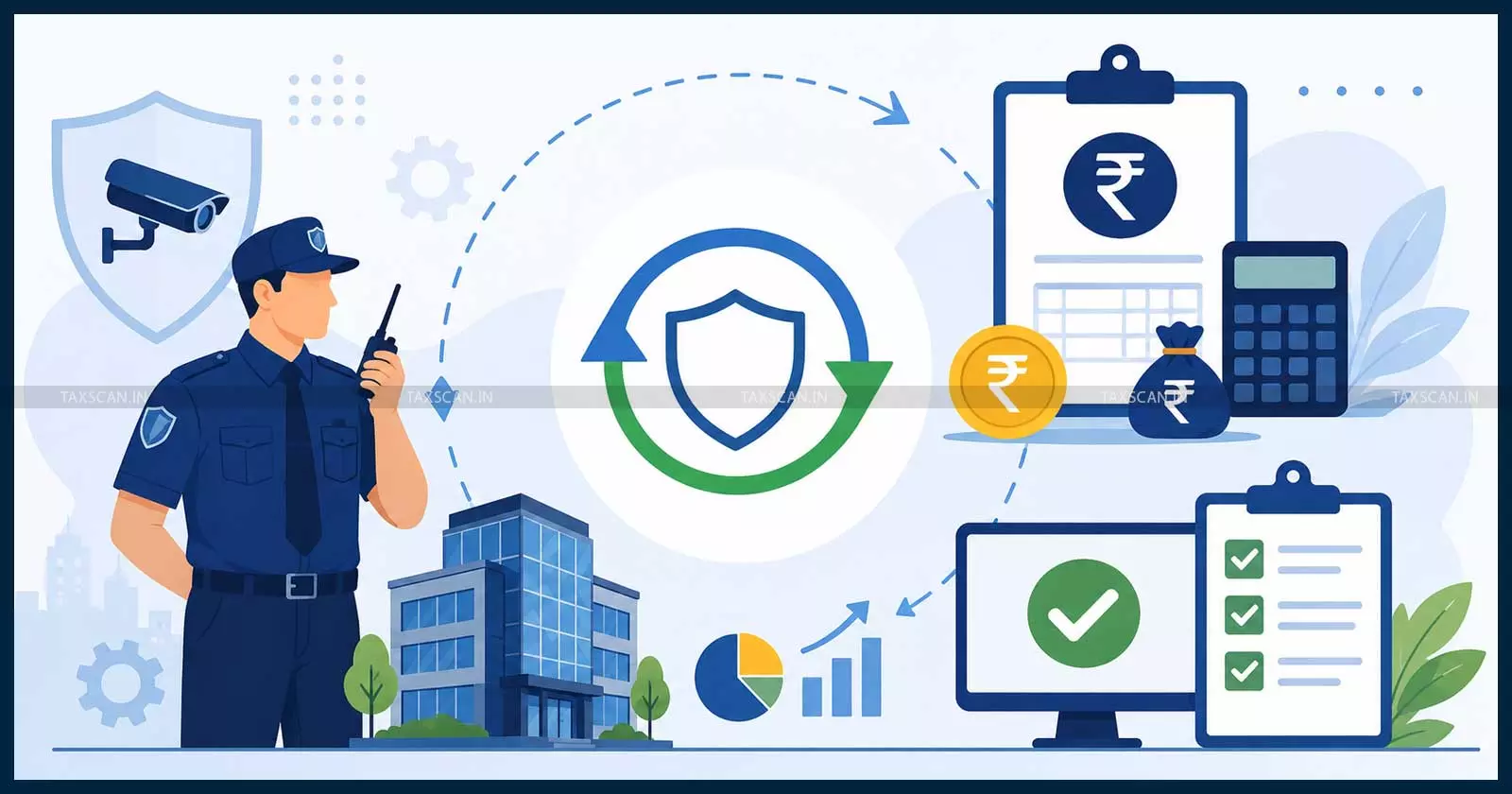
ReverseCharge Mechanism (RCM) on security services under GST applies when a registered person receives security personnel services from a supplier who is not a body corporate. This rule comes from Entry 14 of Notification No. 13/2017-CentralTax (Rate) inserted by Notification No. 29/2018-Central Tax (Rate) dated 31 December 2018, effective from 1 January 2019.
Meaning of RCM on Security Services Under GST
Reverse Charge Mechanism means the recipient pays GST instead of the supplier.
Section 2(98) of the CGST Act, 2017 defines reverse charge. It covers tax payable by the recipient under Section 9(3) or Section 9(4) of the CGST Act and Section 5(3) or Section 5(4) of the IGST Act.
For security services, the relevant provision is Section 9(3) of the CGST Act. The Government notified security services under RCM through Notification No. 13/2017-Central Tax (Rate). Entry 14 was inserted into this notification through Notification No. 29/2018-Central Tax (Rate).
Before 1 January 2019, GST on security services followed the normal forward charge route. From 1 January 2019, selected security services shifted to RCM where the supplier-recipient conditions are satisfied.

What Are Security Services Under GST?
Entry 14 refers to “security services by way of supply of security personnel.”
This covers services where a security agency, individual, partnership firm, proprietorship concern, or similar non-body corporate supplier provides security guards or security personnel to a registered person.
Common examples include:
| Example | RCM position |
| A factory hires guards from a proprietorship security agency | RCM applies |
| A registered hospital hires security staff from a partnership firm | RCM applies |
| A company hires guards from a private limited security agency | RCM does not apply under Entry 14 |
| A registered office hires an individual security contractor | RCM applies |
| A composition taxpayer receives security services | RCM does not apply under Entry 14 |
The key test is not the name of the service provider. The key test is whether security personnel are supplied and whether the supplier is a person other than a body corporate.
When RCM Applies on Security Services
RCM on security services applies when all the following conditions are satisfied.
- The service should be security service by way of supply of security personnel.
- The supplier should be any person other than a body corporate.
- The recipient should be a registered person.
- The recipient should be located in the taxable territory.
- The recipient should not be covered by the specific exclusions in the notification.
For example, ABC Manufacturing Private Limited hires security guards from Sharma Security Services, a proprietorship concern. Sharma Security Services raises a bill of Rs. 1,00,000 without charging GST. ABC Manufacturing has to pay GST under RCM because the supplier is not a body corporate and the recipient is registered under GST.

When RCM Does Not Apply on Security Services
RCM does not apply in every security service transaction.
If the security agency is a body corporate, Entry 14 does not apply. For example, if a company receives security guards from a private limited security agency, the supplier charges GST under forward charge.
RCM also does not apply where the recipient is a composition taxpayer. This exclusion is expressly part of Entry 14.
RCM also does not apply where the service is provided to a department or establishment of the Central Government, State Government, Union Territory, local authority, or Governmental agency that has taken GST registration only for deducting tax under Section 51 and not for making taxable supplies.
If the recipient is unregistered, Entry 14 does not apply because the entry covers services supplied to a registered person. In that case, the tax position has to be checked from the supplier side under normal GST rules.
GST Rate on Security Services Under RCM
The GST rate on security services is 18%.
For intra-State supply, the tax is paid as 9% CGST and 9% SGST. For inter-State supply, the tax is paid as 18% IGST.
The rate does not change merely because the tax is paid under RCM. Reverse charge only shifts the person liable to pay GST. It does not change the value, rate, or nature of supply.
ITC on RCM Paid on Security Services
Input tax credit of GST paid under RCM on security services is available where the service is used in the course or furtherance of business and the conditions under Section 16 of the CGST Act are satisfied.
The recipient should pay the RCM tax in cash. After payment, eligible ITC is claimed in the GST return.
For example, a registered factory uses security guards for factory premises. The service is used for business. GST paid under RCM on that security service is eligible as ITC, subject to Section 16 and Section 17 of the CGST Act.
If the security service is used for a non-business purpose, ITC is not available to that extent.
If the recipient supplies exempt goods or exempt services, common credit reversal under Section 17 and the CGST Rules has to be examined.
Payment of RCM Through Cash Ledger
RCM liability has to be paid through the electronic cash ledger.
A business cannot use ITC balance in the electronic credit ledger to pay GST under RCM. This rule is important because taxpayers regularly make the mistake of adjusting RCM liability against available ITC.
After the RCM amount is paid in cash, the recipient claims ITC of the same amount if eligible.
The recipient first pays tax in cash and then claims credit.

Self-Invoice and Payment Voucher for Security Services
Self-invoice is required where the supplier is unregistered and the registered recipient is liable to pay GST under RCM.
Section 31(3)(f) of the CGST Act requires the recipient to issue an invoice in respect of goods or services received from an unregistered supplier where tax is payable under RCM.
Section 31(3)(g) requires the recipient to issue a payment voucher at the time of making payment to the supplier.
For example, a registered company receives security services from an unregistered proprietorship concern. The company should issue a self-invoice and payment voucher, pay GST under RCM, and then claim ITC if eligible.
Where the security agency is registered but RCM applies because it is not a body corporate, the supplier issues an invoice stating that tax is payable on reverse charge basis. In that case, the recipient pays GST under RCM based on the supplier invoice.
GSTR-3B Reporting for RCM on Security Services
The recipient reports the RCM liability in GSTR-3B.
The tax payable under RCM is reported under Table 3.1(d). Eligible ITC is reported under Table 4, subject to the GST return format and applicable reporting instructions.
The accounts team should reconcile the security expense ledger with GSTR-3B every month.
A proper RCM register should include:
| Field | Details to record |
| Supplier name | Name of security agency |
| Supplier constitution | Proprietorship, partnership, LLP, company, individual |
| GSTIN status | Registered or unregistered |
| Invoice number | Supplier invoice or self-invoice number |
| Taxable value | Monthly service value |
| GST rate | 18% |
| RCM tax paid | CGST, SGST or IGST |
| ITC status | Eligible, ineligible or partly eligible |
| GSTR-3B month | Month of reporting |
Conclusion
RCM on security services under GST applies under Entry 14 of Notification No. 13/2017-Central Tax (Rate), inserted by Notification No. 29/2018-Central Tax (Rate), effective from 1 January 2019. The rule applies when security personnel services are supplied by a person other than a body corporate to a registered person.
The GST rate is 18%. The recipient pays GST under RCM through the electronic cash ledger. ITC is available where the service is used for business and the credit is not restricted under the CGST Act.
Support our journalism by subscribing to Taxscan premium. Follow us on Telegram for quick updates