

Trump Tariffs to get questioned at US Top Court
US President Donald Trump’s expansive import duties are facing the highest judicial scrutiny in the United States, as the Supreme Court prepares to examine the legality of his trade measures. The case could have wide-ranging implications for presidential powers and American trade policy
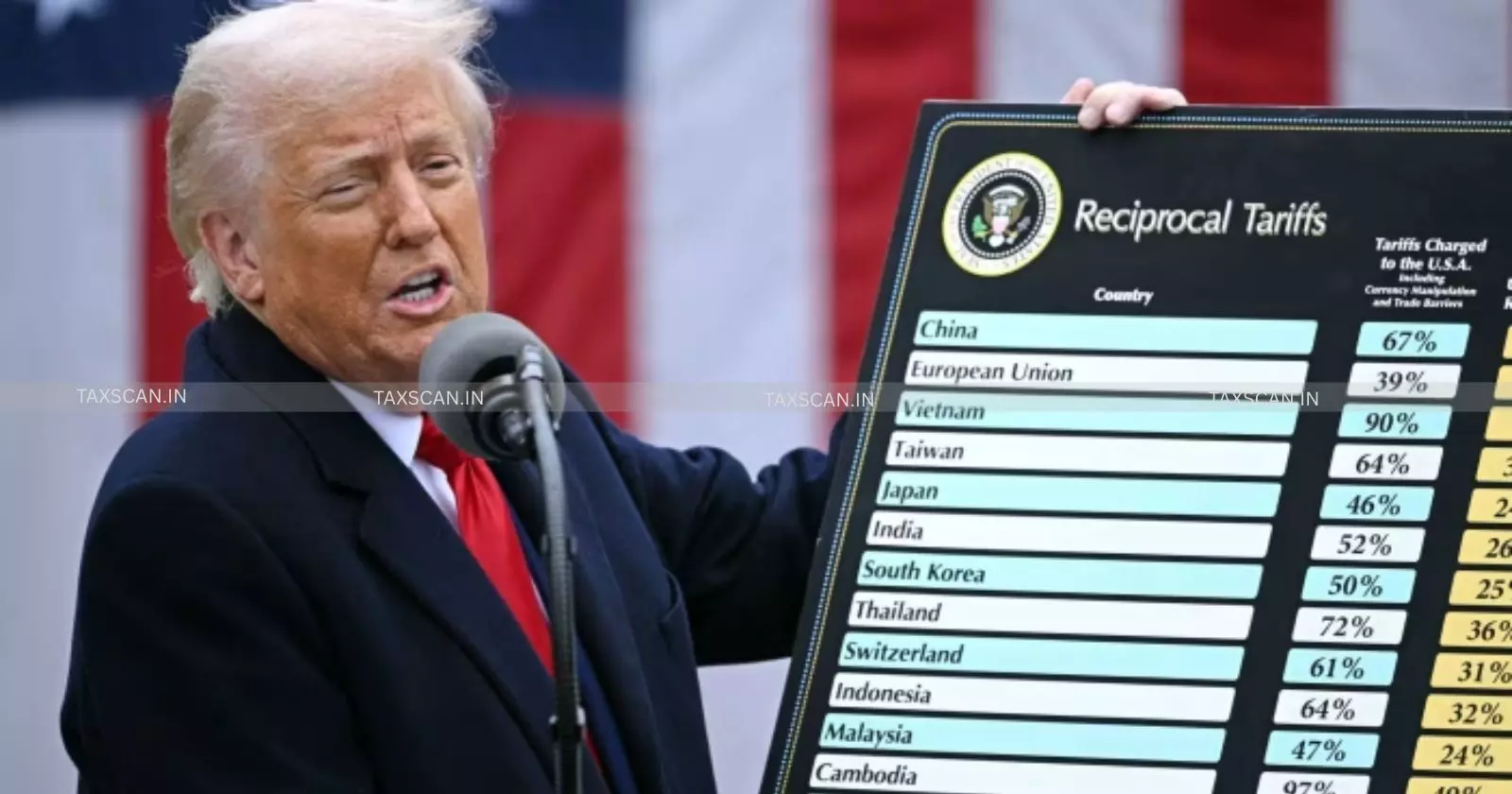
The sweeping tariffs imposed during Donald Trump’s presidency are set to be reviewed by the Supreme Court, marking a critical test of the boundaries of executive authority over trade. The tariffs, introduced under the banner of national security, applied broadly to goods from multiple countries and sparked immediate legal challenges
The Supreme Court of America will hear oral arguments on the legality of Donald Trump’s sweeping global tariffs on the 5th of November. The court announced earlier thismonth it would hear the case after a lower appeals court ruled that the US president had overstepped his authority by using a federal law meant for emergencies to impose most of his broad tariffs on the world.
Trump’s administration relied on the International Emergency Economic Powers Act (IEEPA) of 1977 to justify the measures, claiming the authority to impose duties as part of a “reciprocal” strategy to counteract unfair trade practices.
The tariffs established baseline import duties of around 10% on numerous products, with higher rates for specific nations. Critics argued that the approach represented an unprecedented expansion of presidential power, bypassing Congress’s traditional role in setting trade policy.
Lower courts have already weighed in on the controversy. In May 2025, a panel of the United States Court of International Trade concluded that the tariffs exceeded the powers granted under IEEPA.
The judges emphasised that while the statute allows the president to take action in genuine national-security emergencies, it does not provide carte blanche to impose sweeping economic sanctions in the form of trade tariffs. The ruling highlighted the historical precedent of Congress holding primary authority over tariff legislation.
The appeals process added further complexity. In July 2025, the United States Court of Appeals for the Federal Circuit expressed doubts about the statute’s application, noting that IEEPA does not explicitly mention tariffs.
For businesses, the case carries significant implications. Many industry groups filed briefs in support of striking down the tariffs, citing disruptions to supply chains, rising consumer prices, and uncertainty in international trade.
Economists have similarly warned that broad, unilateral tariff decisions can have unintended ripple effects on domestic markets and global partnerships.
Politically, the debate remains highly charged. Trump and his supporters maintain that the tariffs were necessary to protect American jobs, reduce trade deficits, and assert the United States’ leverage on the world stage.
Opponents, however, contend that the measures were excessive, lacked proper legislative oversight, and risked retaliatory action from affected countries.
The Supreme Court’s forthcoming hearing is likely to draw intense public and political attention. The justices will consider not only the technical legality of the tariffs but also the broader constitutional question of how far a president can extend national-security powers into economic policy.
The outcome could set a precedent affecting future administrations and the scope of executive authority in trade matters for decades.
As arguments proceed, stakeholders across the United States and the global trade community are watching closely. Whether the tariffs will be upheld, modified, or invalidated, the ruling promises to reshape the framework for presidential control over economic policy and redefine the balance of power between the executive and legislative branches.
Support our journalism by subscribing to Taxscan premium. Follow us on Telegram for quick updates
