Why does Economic Survey hint that GST is fiscally stable, but administratively heavy?
The survey recommended changes to reduce cross-subsidies, improve the trust and nudge theory in e-way billing, stabilize the pipeline for equity monetization by changing the definition of government companies
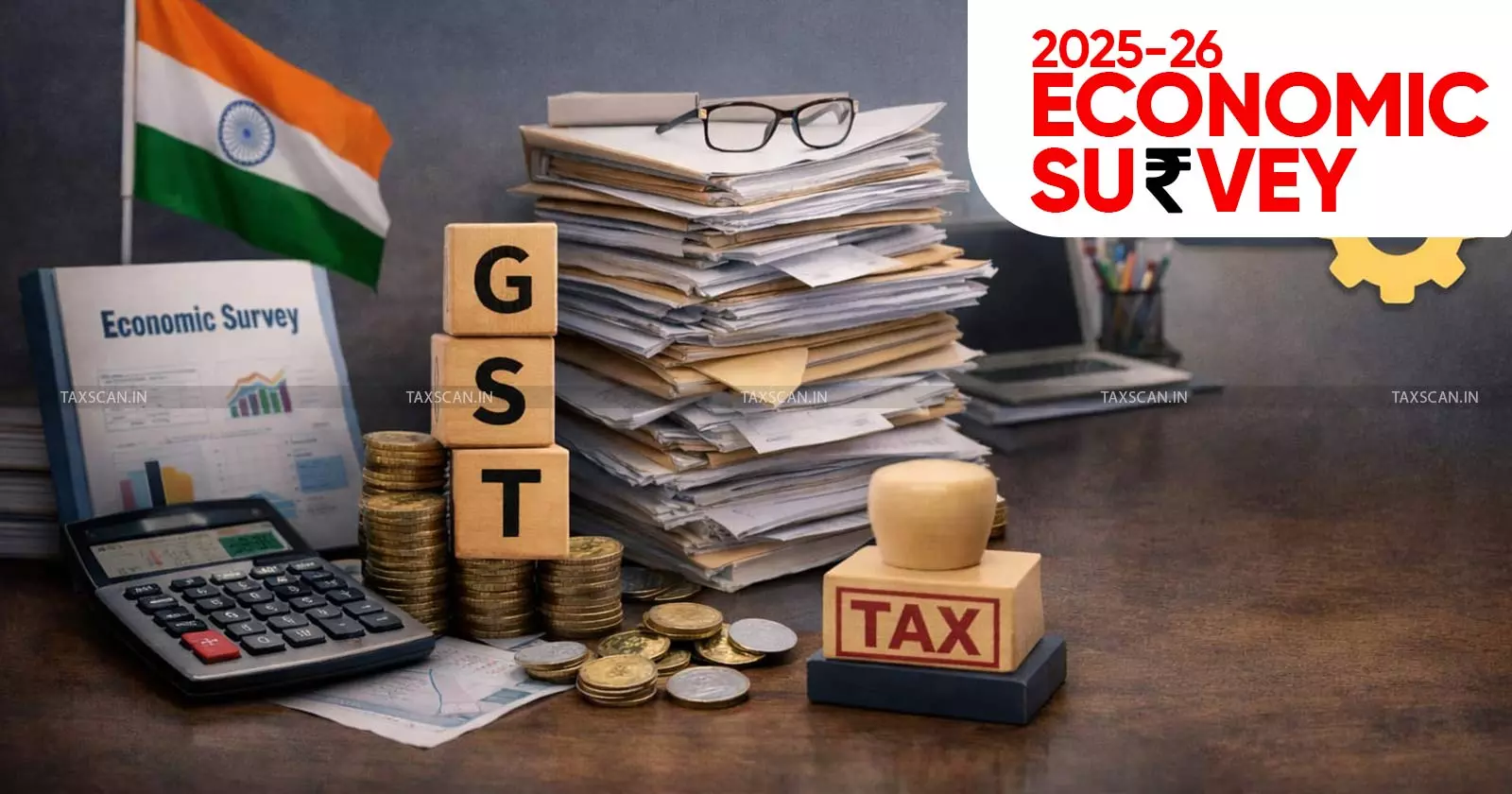
The Economic Survey 2025-26, given by Chief Economic Advisor V. Anantha Nageswaran shows that the GST ( Goods and Services Tax ) is fiscally stable, where the gross collections during April-December 2025 stood at ₹17.4 lakh crore amid revenue buoyancy.
The survey states that “Gross GST collections during April - December 2025 stood at ₹17.4 lakh crore, registering a year-on-year growth of 6.7 per cent. GST revenue growth is broadly aligned with prevailing nominal GDP growth conditions. In parallel, high-frequency indicators suggest robust transaction volumes, with cumulative e-way bill volumes during April-December 2025 growing by 21 per cent YoY.”
Simultaneously, the survey recommended changes to reduce cross-subsidies, improve the trust and nudge theory in e-way billing, stabilize the pipeline for equity monetization by changing the definition of government companies, increase spending efficiency, and manage short-term surpluses to achieve further fiscal consolidation.
GST - Fiscally Stable
The Survey noted that gross GST collections continue to track nominal GDP growth. Therefore this shows that the revenues are growing to the level of ‘predictable’ and reliable fiscal sources for both the centre and the states.
As per 2025 data, we have 1,34,52,270 normal taxpayers and 14,79,938 composition taxpayers. Despite the economic uncertainties including trade wars and other set backs, the GST was relatively stable and will be a reliable source in the future.
Administrative Weight Still Heavy
Though the survey given the positive side of GST collection, it has some administrative issues including the compliance of return filing. Multiple rate slabs, classification disputes, inverted duty structures, and frequent compliance requirements continue to burden the taxpayers.
The GST portal issues during the due dates makes the taxpayers and professionals burn out. Even though the GST has expanded the tax base, the small companies and consumer consumption still depend on easier compliance.
A high compliance imposed, especially on MSMEs with limited accounting capability, by numerous return files, invoice reconciliation, e-way bills, and frequent system updates will lead to error-prone filings, Increased notices and scrutiny and higher enforcement costs relative to revenue yield. This will ultimately have to compromise on the ease of doing business.
With the introduction of GST in 2017, 17 charges were eliminated, logistics were reduced by 30%, and a 50% shadow economy was formalized. Slabs were combined in the 56th Council (September 2025), but single-return was postponed. FY25 buoyancy (post-pandemic average) verifies, but the Survey's 2.0 call indicates a plateau: volumes require a compliance push to expand by 8-10%.
Therefore, even if the GST is stable and reliable, if the administrative side is not proper and heavy, it does not help in achieving the ease of doing business.
Support our journalism by subscribing to Taxscan premium. Follow us on Telegram for quick updates