Why Income Tax Notices are Increasing: 5 Red Flags Taxpayers Must Watch
Income Tax notices are rising especially for high earners as stricter data matching and scrutiny flag mismatches and high-value transactions.
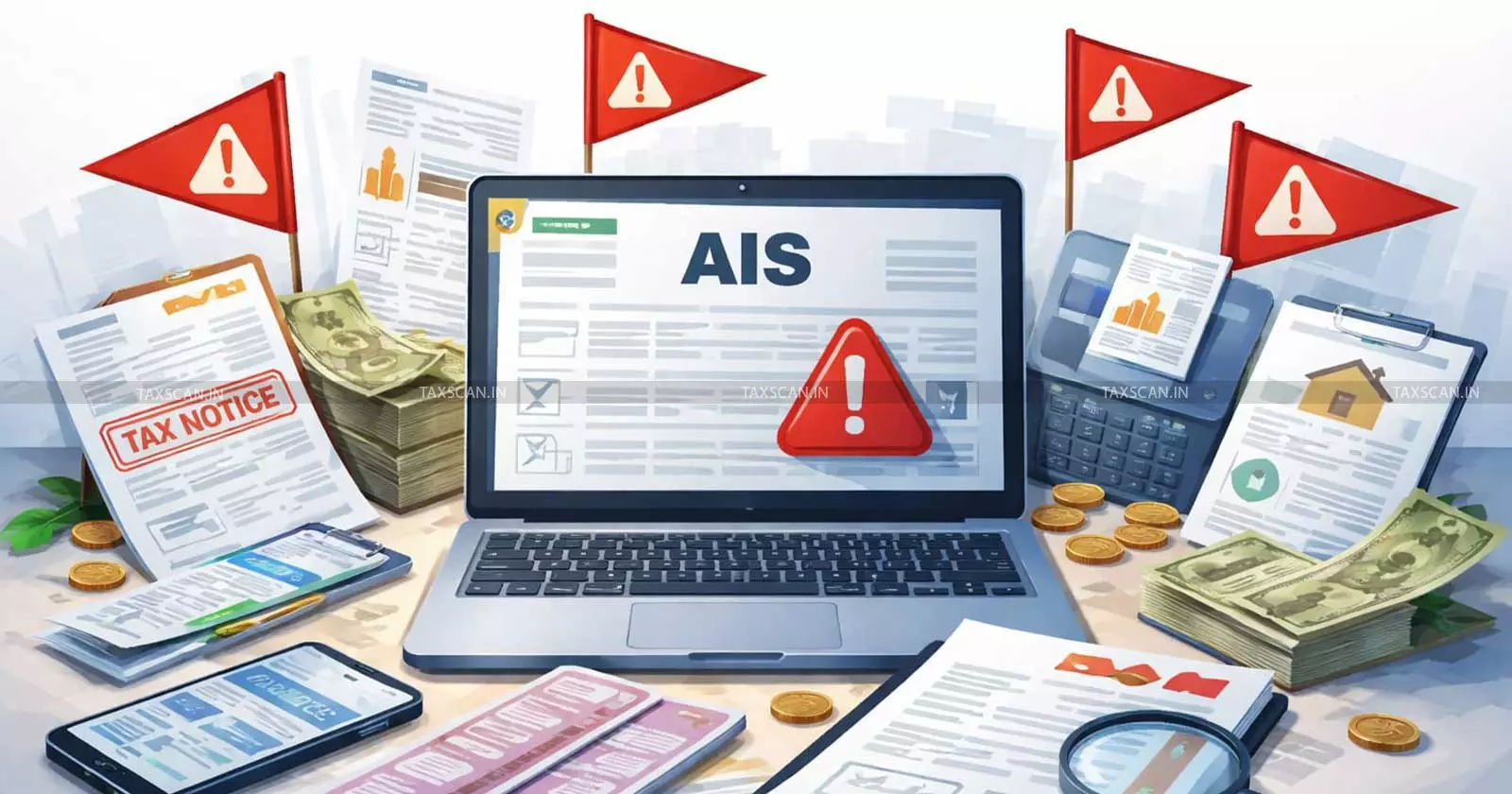
IncomeTax (IT) notices are increasing in India mainly because the tax department is now using stronger data tracking and automated matching. Earlier, many issues stayed unnoticed unless there was a manual check.
Now, your ITR is compared with multiple digital records like AIS/TIS, TDS data, bank reporting, broker reporting, and high-value transaction reporting. So even a small mismatch can trigger a message or a notice.
Also, in the last few months, there is more focus on high-income professionals and senior executives. Many executives (often earning above Rs. 50 lakh) have reportedly received “nudge” style communications/notices for possible non-disclosure or under-reporting linked to foreign assets, ESOPs/RSUs, crypto holdings, and misuse of exemptions.
These are often not raids or penalties but they are still serious because the department expects you to verify and fix issues quickly.
Why IT notices are rising now
1) Data matching is tighter than before
The department can see a broader picture of your financial activity. If your return does not align with what is already reported by banks, employers, brokers, mutual funds, or other entities, you may get flagged.
2) More “system-generated” alerts
Many notices and intimations are not written by an officer first. They are generated by rules/analytics. This is why even honest taxpayers sometimes get notices for basic mistakes, timing differences, or third-party reporting errors.
3) High-income taxpayers are under extra lens
Recent outreach has especially targeted senior executives and other high earners where compensation structures are complex (salary + bonus + perquisites + ESOP/RSU + foreign benefits). In these cases, missing one schedule or one entry is very common, and the system catches it.
Red Flag 1: You filed the wrong ITR form or used wrong income head
This looks simple but it causes lots of trouble.
Common examples:
- You had capital gains (shares/mutual funds) but filed ITR-1.
- You did Futures & Options (F&O) but filed a form not meant for it.
- You reported professional income under “Other Sources” or mixed up business vs salary vs capital gains.
What to do:
- List your income types first: salary, house property, capital gains, business/profession, other sources.
- Pick the correct ITR form based on that.
Red Flag 2: AIS mismatch (income shows in AIS, but missing in ITR)
This is currently the biggest reason many taxpayers are getting intimations.
Common misses:
- Savings/FD interest not fully reported
- Dividend income forgotten
- Capital gains not matching broker statement
- ESOP/RSU perquisite values not reported correctly (very common for executives)
- Freelancing/side income not reported
- Foreign income or foreign assets disclosure missing
What to do:
Before filing, reconcile ITR with AIS/TIS and Form 26AS. If AIS data is wrong, raise feedback and keep proof (email, statement, broker note, etc). If you made the mistake, revise/update return within allowed time.
Red Flag 3: Deductions/exemptions are overstated
A lot of notices come because deductions look higher than expected or are not supported.
Common problems:
- HRA claimed but rent proof is weak, or landlord details are missing where required
- Donation claims that don’t match genuine receipts
- Deductions claimed twice (like same insurance premium also considered elsewhere)
- Large exemptions that don’t fit salary structure
Recently, there were reports where incorrect deduction claims led to big demands and penalty risk. So it’s not just a small correction anymore, it can become expensive.
What to do:
- Keep rent agreement + rent receipts + landlord PAN where needed.
- Store donation receipts with full donee details.
- 80C/80D proofs and payment trails.
Red Flag 4: High spending / big transactions that don’t match your reported income
When your spending pattern looks too high compared to your declared income, the department may ask: “Source of funds?”
This can include large credit card spends, large cash deposits or frequent cash activity, buying property, expensive car, big foreign travel spend, large investments that don’t match income level
There is also recent discussion around stricter tracking of credit-card related reporting and transparency, so this area is becoming more sensitive.
What to do:
- Maintain a clean money trail: salary credits, loan documents, redemption statements, gift deed (if relevant).
- Avoid cash-heavy transactions without clear reasons and proof.
- If you used savings from past years, keep supporting records (old bank statements, sale proofs, etc).
Red Flag 5: Foreign assets/income and executive compensation (ESOP/RSU/crypto) not disclosed properly
This one has become a “hot zone”, especially for senior executives and global employees.
Common Issues:
- Foreign bank accounts not disclosed
- RSUs/ESOPs from overseas parent company not shown correctly
- Wrong conversion to INR
- Confusion between perquisite taxation (at vest/exercise) vs capital gains (at sale)
- Foreign dividend/interest missing
- Crypto investments not declared correctly (where applicable)
Why executives are getting notices recently:
high earners often have ESOP/RSU activity plus foreign holdings, and even small reporting gaps can look like non-disclosure. Recent “nudge” notices reported for executives are often linked to these exact areas.
What to do:
Collect all ESOP/RSU documents:
- grant/vesting/exercise statements, FMV details, sell-to-cover details, Form 16 entries if any, broker notes.
- Ensure correct schedules are filled for foreign assets/income.
- If foreign tax was paid, claim it properly and keep documents.
If you receive a notice or intimation: what you should do
- Read the subject and section carefully (it may be an intimation, mismatch alert, or a compliance verification).
- Compare your ITR with AIS/TIS, Form 26AS, Form 16, bank/broker statements.
- If it’s your error, revise/update return (if allowed) and pay due tax/interest.
- If it’s not your error, respond with documents and explanation (keep it factual and point-by-point).
- Don’t delay: most problems grow when deadlines are missed.
Support our journalism by subscribing to Taxscan premium. Follow us on Telegram for quick updates