Zero-Rated Refunds Under LUT vs IGST Paid Route: Common Errors that Block Refunds
Zero-rated GST refunds get blocked when exporters choose the wrong route between LUT and IGST paid, or when invoices, returns, shipping bills, and ITC data do not match.
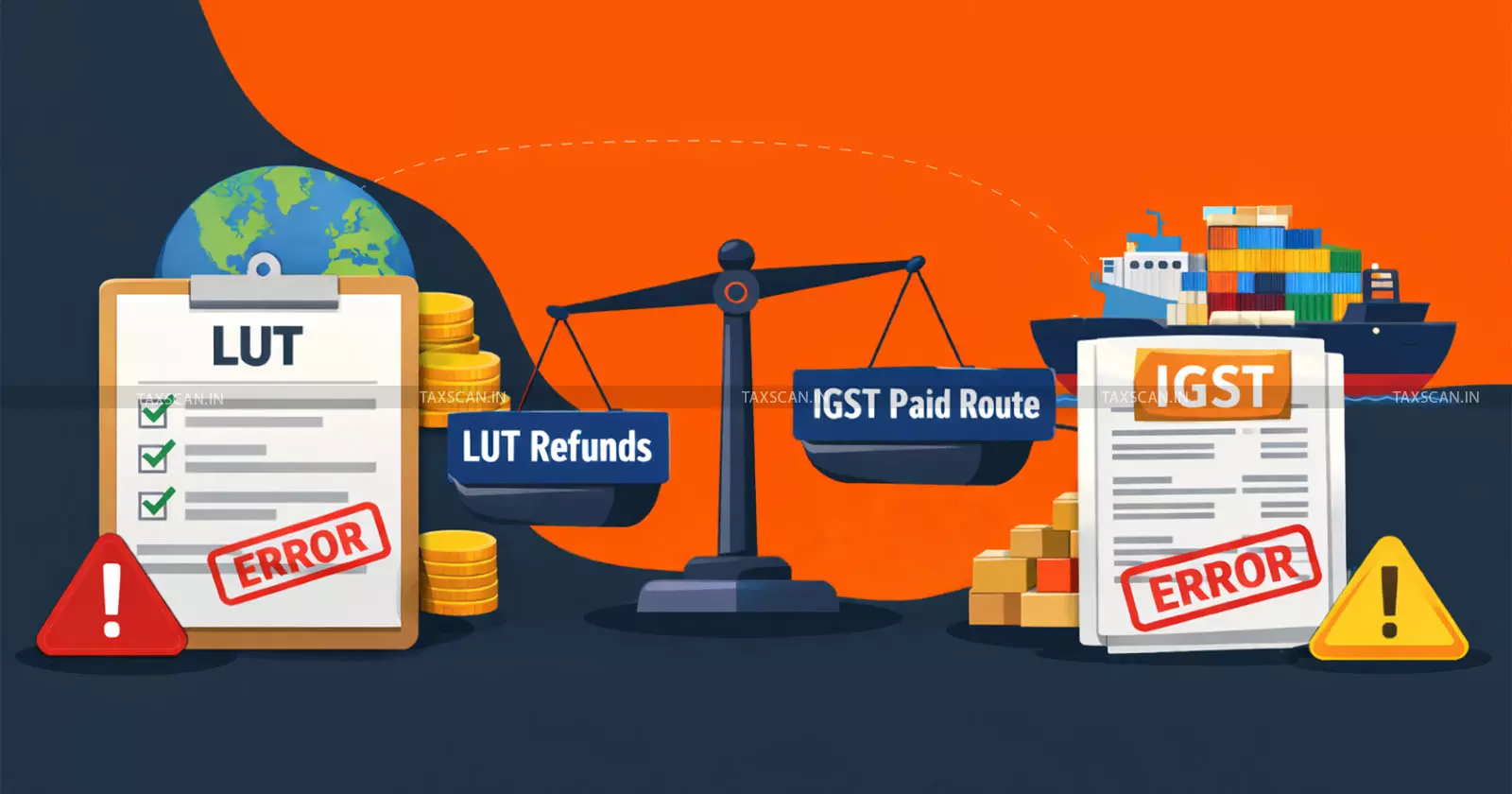
Exports and supplies to SEZ are treated as zero-rated supplies under GST. Zero-rated does not mean “no compliance.” Refunds in zero-rated cases move only when the taxpayer follows the correct route, reports the correct data in returns, and uploads the correct documents with Form GST RFD-01.
Refund claims get blocked when invoice data does not match between GST returns, shipping bill data, bank realisation evidence, and refund statements.
There are two refund routes for zero-rated supplies. The first route is export or SEZ supply without payment of IGST under a Letter of Undertaking (LUT) where refund is claimed for unutilised input tax credit (ITC). The second route is export with payment of IGST where refund is claimed for the IGST paid on the export invoice.
Each route has different conditions and different failure points. A refund that is filed under the wrong route will fail even if the underlying export is genuine.
Two routes, two different refunds
Route A: LUT route (without payment of IGST)
Under LUT, the exporter does not pay IGST on export invoices. The exporter claims refund of accumulated ITC. This route applies for export of goods, export of services, and supplies to SEZ made without payment of tax.
Key feature: refund is for ITC, not for output tax.
Route B: IGST paid route (with payment of IGST)
Under this route, the exporter pays IGST on export invoices and claims refund of the IGST paid. The refund is processed based on return data and shipping bill data.
Key feature: refund is for IGST, not for ITC.
Choose the correct route
Refund blocks start from this mistake. Many exporters switch routes mid-year or mix invoice treatment in the same period without tracking. That creates mismatch in GSTR-1, GSTR-3B, and refund statements.
Common wrong choices include:
Filing ITC refund under LUT when invoices were issued with IGST payment.
Expecting IGST refund when invoices were issued under LUT and no IGST was paid.
Treating SEZ supplies like exports without required endorsements.
Claiming both IGST refund and ITC refund on the same set of invoices.
A refund officer checks the route by reading invoice tax fields, return tables, and payment data. If route and reporting do not match, refund fails.
Common errors under LUT route that block refundError 1: LUT is not valid for the period
LUT must be furnished for the relevant financial year before exports without payment. If LUT is not furnished or is filed late, exports without payment become non-compliant and refund gets questioned.
Fix: keep LUT filing proof and ensure validity for the entire year.
Error 2: Export invoices not reported correctly in GSTR-1
Export invoices must be reported in correct GSTR-1 tables with correct:
shipping bill number and date for goods export
port code
invoice number and date
taxable value
tax rate and tax amount as “zero” for LUT cases
Common reporting mistakes:
reporting export invoices in B2B table instead of export table
wrong shipping bill number or date
wrong port code
invoice amendments not done properly
Fix: reconcile invoice list with GSTR-1 export table before filing refund.
Error 3: GSTR-3B does not match GSTR-1
Refund processing checks consistency. When taxable value in export table of GSTR-1 does not match the zero-rated figure in GSTR-3B, refund gets held.
Common causes:
missing export turnover in GSTR-3B table for zero-rated supplies
wrong reporting of ITC utilisation
late amendments in GSTR-1 without matching changes in 3B
Fix: monthly return reconciliation is required before refund filing.
Error 4: ITC not matching with GSTR-2B
Refund is based on eligible ITC. If ITC in refund working includes invoices not reflected in GSTR-2B, refund gets reduced or blocked, unless supporting documents and explanation are strong.
Fix: reconcile ITC register with GSTR-2B and segregate missing invoices for follow-up with vendors.
Error 5: Wrong refund formula inputs
Refund of unutilised ITC under zero-rated supplies is based on formula. Errors occur when:
turnover of zero-rated supplies is taken wrong
adjusted total turnover is taken wrong
net ITC includes ineligible credits
credit for capital goods is included when not permitted under the relevant rule
ITC for exempt supplies is not reversed
Fix: build a refund working sheet with clear break-up and mapping to returns.
Error 6: Missing evidence for export of services
For export of services, the officer checks conditions, including receipt of foreign exchange and place of supply tests. Refund gets blocked when:
BRC or FIRC is missing
remittance does not match invoice
agreement and invoice do not show export nature
recipient details are incomplete
Fix: maintain an invoice-wise linkage between service invoice and inward remittance proof.
Error 7: SEZ supplies lack endorsements
For SEZ supplies, refund requires endorsement by the specified officer of SEZ for authorised operations. Refund fails when:
endorsement is missing
endorsement does not cover all invoices
endorsement is not in proper format
invoice list in refund statement does not match endorsement list
Fix: obtain endorsement early and maintain invoice-level match.
Common errors under IGST paid route that block refundError 1: IGST payment not reflecting in GSTR-3B
Refund of IGST is allowed only if IGST is paid on export invoice. If the exporter reports export invoices with IGST in GSTR-1 but does not pay the IGST through GSTR-3B, refund gets blocked.
Fix: ensure IGST payable is discharged in the correct tax period.
Error 2: Shipping bill and GSTR-1 mismatch
IGST refund is linked with shipping bill data. Common mismatch points include:
invoice number mismatch
invoice date mismatch
shipping bill number mismatch
port code mismatch
change in invoice details after filing shipping bill without matching amendment in GSTR-1
Fix: ensure invoice data in shipping bill and GSTR-1 is identical.
Error 3: Export General Manifest (EGM) is not filed
IGST refund for goods export is processed after EGM is filed. If EGM is pending, refund stays on hold.
Fix: coordinate with customs broker and confirm EGM status for each shipping bill.
Error 4: Bank account and registration mismatches
Refund is paid to bank account mapped in GST registration and portal. Refund fails or gets delayed if:
bank account is not validated
account is closed
name mismatch exists
IFSC mismatch exists
Fix: keep bank details updated and validated before refund filing.
Error 5: Ineligible claims due to restriction or violation
Export with IGST paid route has restrictions in certain cases such as where certain benefits are claimed. Refund can be restricted when exporter claims ineligible benefit combinations.
Fix: review incentive scheme positions and confirm eligibility for IGST refund route.
5) A single master control: invoice-level reconciliation
Most refund blocks arise from one issue: invoice-level mismatch across systems. Refund filing needs a three-way match.
For export of goods:
Export invoices in books
Export invoice details in GSTR-1
Shipping bill data and EGM status in customs system
For export of services:
Service invoices in books
Invoice reporting in GSTR-1 and 3B
Realisation proof for consideration in foreign exchange
For SEZ supplies:
Tax invoice
GSTR-1 and 3B reporting
SEZ endorsement for authorised operations
If this match is clean, refund passes faster.
6) Practical filing discipline that prevents blocks
A strong process has these steps:
Freeze invoice list for the period.
Match invoice list with GSTR-1 table data.
Match turnover figures with GSTR-3B.
Match ITC with GSTR-2B for LUT route.
Match shipping bill and EGM data for IGST paid route.
Prepare refund statement format and attach required documents.
Validate bank account and registration data.
File RFD-01 with correct category and correct statement.