

Fake GST Registration Using Another’s PAN, Bogus Invoices: Allahabad HC Grants Bail to Accused [Read Order]
The order underscores judicial scrutiny of prosecutions invoking general penal laws in matters governed by special statutes like the GST Act.
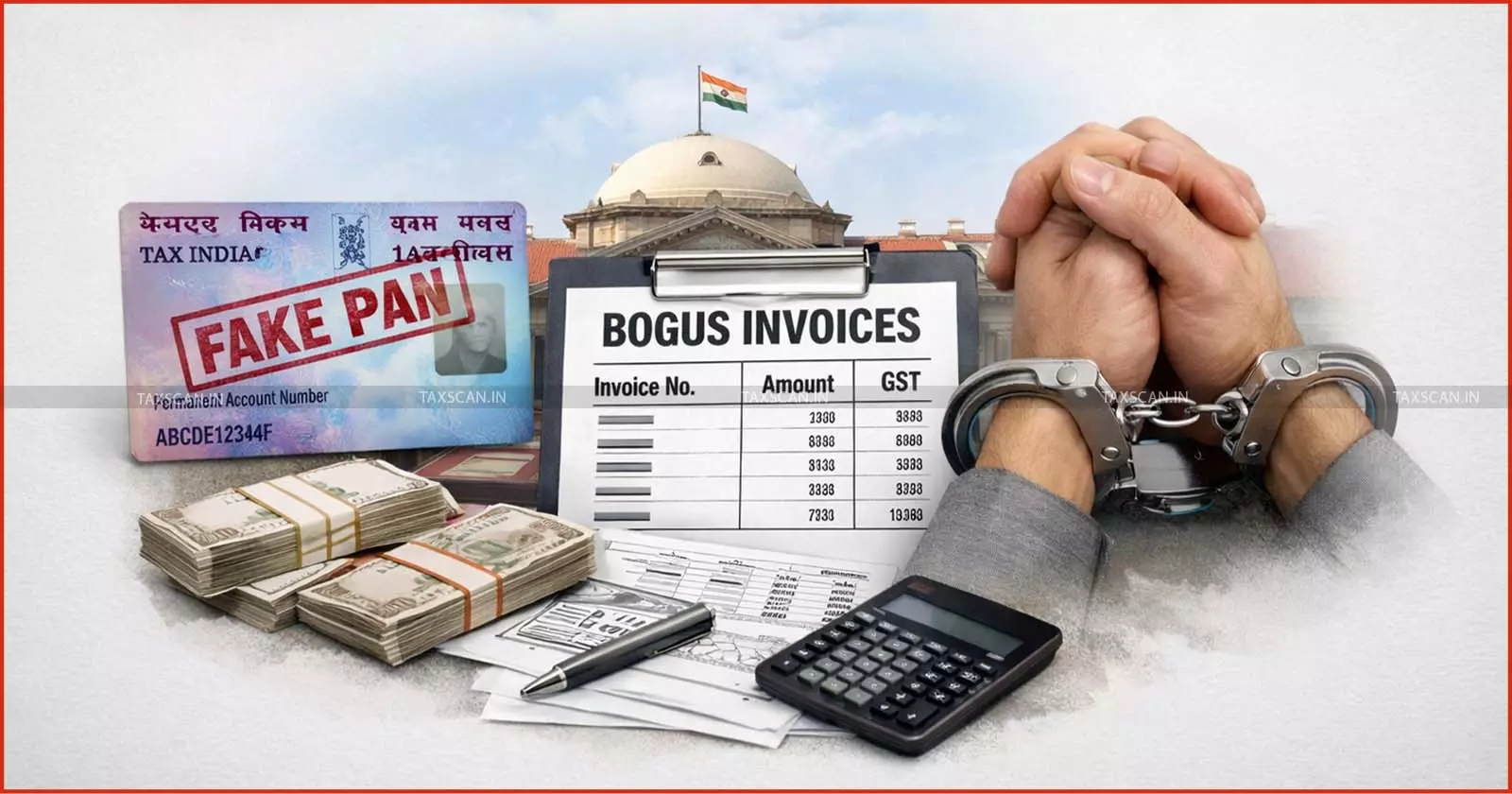
In a recent order, the Allahabad High Court has granted bail to Amit Joshi, who was arrested in connection with an alleged fake Goods and Services Tax (GST) registration and issuance of bogus invoices amounting to over ₹1.23 crore.
The case arose from an FIR lodged at Brahmpuri Police Station, Meerut, naming one Kunal as the prime accused for fraudulently obtaining GST registration in the name of Bhagwati Enterprises using another person’s PAN and documents. Investigators later alleged that fakeIGST invoices were issued to Jai Ganesh Enterprises, a Delhi‑based firm, during February and March 2025.
Senior Advocate Dileep Kumar, appearing for the Applicant Amit Joshi, argued that his client was not named in the FIR and had no connection with either firm. The prosecution’s claim rested solely on call‑detail records of a mobile number allegedly used during registration. Counsel contended that the GST Act, 2017, is a self‑contained code prescribing its own procedure for investigation and prosecution, and that invoking penal provisions of the Bharatiya Nyaya Sanhita without first proceeding under the GST Act was impermissible.
He further submitted that even if the allegations were accepted, the offence would fall under Section 132(1)(iii) of the CGST Act, which makes cases involving amounts below ₹2 crore bailable and compoundable. No proceedings under the CGST Act had been initiated against Joshi, depriving him of the opportunity to seek compounding.
The Additional Government Advocate opposed the bail plea but did not dispute the legal submissions.
After the submission, Justice Ashutosh Srivastava, after considering the nature of the accusations, evidence, and punishment severity, held that a case for bail was made out.
The Court directed Joshi’s release on a personal bond with two sureties, subject to conditions that he not tamper with evidence, intimidate witnesses, or engage in criminal activity, and that he appear regularly before the trial court.
Considering the nature of accusations, evidence, and punishment severity, the Court held that a case for bail was made out and directed Joshi’s release on bond with conditions to ensure cooperation in trial and non‑interference with witnesses.
Support our journalism by subscribing to Taxscan premium. Follow us on Telegram for quick updates
