Gift Taxation in India: Section‑wise Guide under Income‑tax Act, 1961 and 2025
While the 2025 Act renumbers and simplifies the provision, the core taxation principles and exemptions remain unchanged.

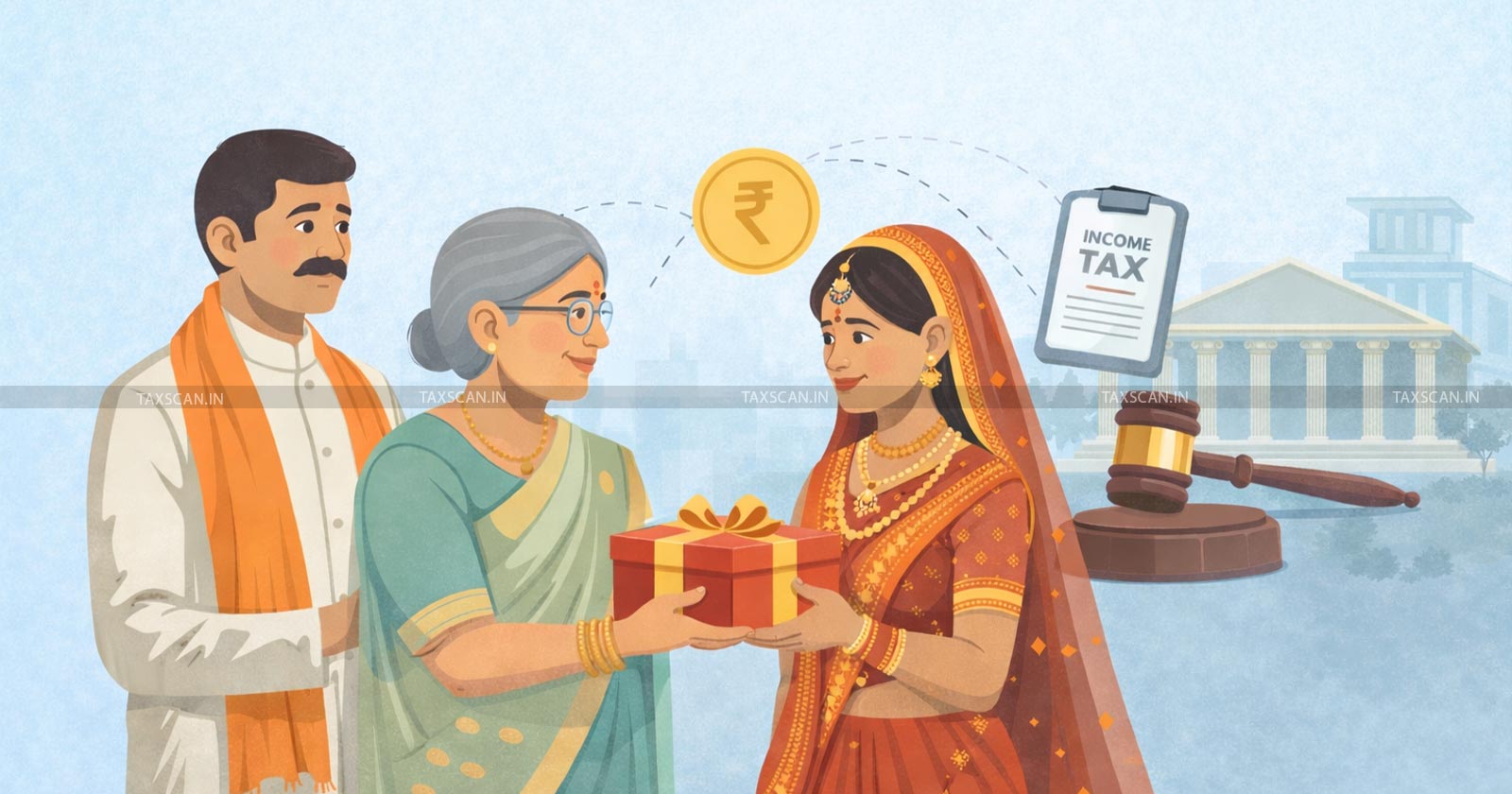
Gift‑giving in India is culturally very meaningful, but in tax law, it is not always a gesture free of consequences. Both the Income‑tax Act, 1961, and the Income‑tax Act,2025, treat certain gifts as taxable income under the head “Income from Other Sources.” Gifts can become fully taxable income if the law is not applied correctly.
This article provides a section‑wise understanding for professionals and taxpayers.
Old vs New Law
Under the Income‑tax Act, 1961, the relevant provision is Section 56(2)(x). Under the Income‑tax Act, 2025, the corresponding provision is Section 92(2)(m). Both sections operate on the same principle, taxing specified gifts received without or for inadequate consideration when certain conditions are met.
In both Acts, gifts are treated as income when they exceed the prescribed threshold and are received without consideration or for inadequate consideration.
When Do Gifts Become Taxable?
It is important to understand when gifts become taxable. A gift becomes taxable when it is received by an individual or a Hindu Undivided Family (HUF), without consideration or for inadequate consideration, and the aggregate value of such gifts exceeds ₹50,000 in a financial year.
The law covers three categories of assets:
- Money: Cash, cheque, or bank transfer.
- Movable Property: Shares, securities, jewellery, paintings, bullion, etc.
- Immovable Property: Land or buildings.
Gift From NRI Relative Not Taxable as Income if Genuineness is Proved: ITAT [Read Order]
Tax Treatment of Money, Movable and Immovable Property
The tax treatment depends on the nature of the gift. For money, if the total value of gifts received exceeds ₹50,000, the entire amount becomes taxable. For movable property, taxation is based on the Fair Market Value (FMV) of the asset. For immovable property, if received without consideration, the Stamp Duty Value (SDV) is taxable; if received for inadequate consideration, the difference between the SDV and the actual consideration is taxable. These provisions ensure that transfers of assets without adequate value are brought within the tax net.
Key Exemptions – Common to Both Acts
It has to be noted that Certain gifts are fully exempt under both Acts.
- From Relatives: Defined inclusively (parents, siblings, spouse, lineal ascendants/descendants).
- On Marriage: Gifts received by an individual on their marriage.
- By Will or Inheritance: Testamentary transfers are outside the tax net.
- In Contemplation of Death: Gifts made in anticipation of death.
- From Specified Institutions: Charitable trusts, funds, or approved institutions.
These exemptions have no monetary threshold, meaning the entire value of such gifts is excluded from taxation.
Changes Introduced in the Income‑tax Act, 2025
The Income‑tax Act, 2025, introduces a renumbering of the section from 56(2)(x) to 92(2)(m) and simplifies the language and structure. Also, there is no material change in the taxation principle. In substance, the treatment of gifts remains consistent between the two Acts.
Common Misconception about the ₹50,000 Threshold
Many taxpayers believe that only the amount exceeding ₹50,000 is taxable. In reality, once the threshold is crossed, the entire amount becomes taxable. For example, if gifts worth ₹55,000 are received, the full ₹55,000 is taxed, not just ₹5,000. This distinction is crucial for accurate tax computation.
Gift taxation in India is not about generosity; it is about classification, valuation, and relationship. A well‑planned gift can be tax‑efficient, while a poorly planned one can lead to unexpected tax liability. Both the 1961 and 2025 Acts maintain the same substantive framework, stating the importance of understanding the conditions, exemptions, and documentation requirements. Awareness and compliance with these provisions ensure that gifts are handled lawfully and efficiently under the Indian tax regime.
Cases related to Gift Taxation in India

The Mumbai Bench of the Income Tax Appellate Tribunal has held that the amount received as a gift from the mother on the maturity of fixed deposits cannot be regarded as an unexplained investment under Section 69 of the Income-tax Act, 1961. The Tribunal, thus, deleted the addition of ₹1.75 crore, holding that the assessee had satisfactorily explained the source of funds
Allowing the appeal, the ITAT held that since the AO, in his remand report, had verified and accepted that the fixed deposits of the mother had matured and similar amounts were transferred to both daughters once the source of the funds, the donor’s capacity, and genuineness of the transaction were established, no addition under Section 69 could be made.
The Bench comprising Justice Kavitha Rajagopal [Judicial Member], Prabhash Shankar [Accountant Member] held that the authorities below erred in ignoring verified bank records and concluded that the ₹1.75 crore investment was fully explained. Accordingly, the addition under Section 69 was deleted. However, the Tribunal sustained a separate addition relating to amounts received from the assessee’s sister due to a lack of supporting evidence.

In a recent ruling, the Delhi bench of the Income Tax Appellate Tribunal (ITAT) has upheld that the transfer of 1.76 crore shares of Jindal Steel & Power Ltd. by Gagan Infraenergy Limited to Glebe Trading Pvt. Ltd. was a genuine gift under a family arrangement, not a taxable transaction. ITAT also dismissed the Revenue’s appeal against the deletion of a ₹489 crore capital‑gains addition.
The bench comprising Judicial Member Anubhav Sharma and Accountant Member Manish Agarwal found no merit in the contention, stating that the Department had accepted the earlier ITAT rulings in the donee’s cases and had not pursued appeals before the High Court.
The Tribunal accordingly upheld the deletion of the ₹ 489.30 crore addition and dismissed the Revenue’s appeal. The assessee’s cross‑objections were treated as academic. The bench observed that “Accordingly, we find no substance in the grounds of appeal of the Revenue and the appeal is dismissed. The cross-objections on merits supporting the findings of ld. CIT(A), are rendered academic and accordingly allowed for statistical purposes.”Accordingly, the appeal was dismissed.
Support our journalism by subscribing to Taxscan premium. Follow us on Telegram for quick updates