

Savings Bank Accounts Under New Income Tax Rules 2026: Annual Limits Replace Daily Caps
These reforms simplify routine banking while tightening checks on high‑value cash transactions to curb unaccounted money.
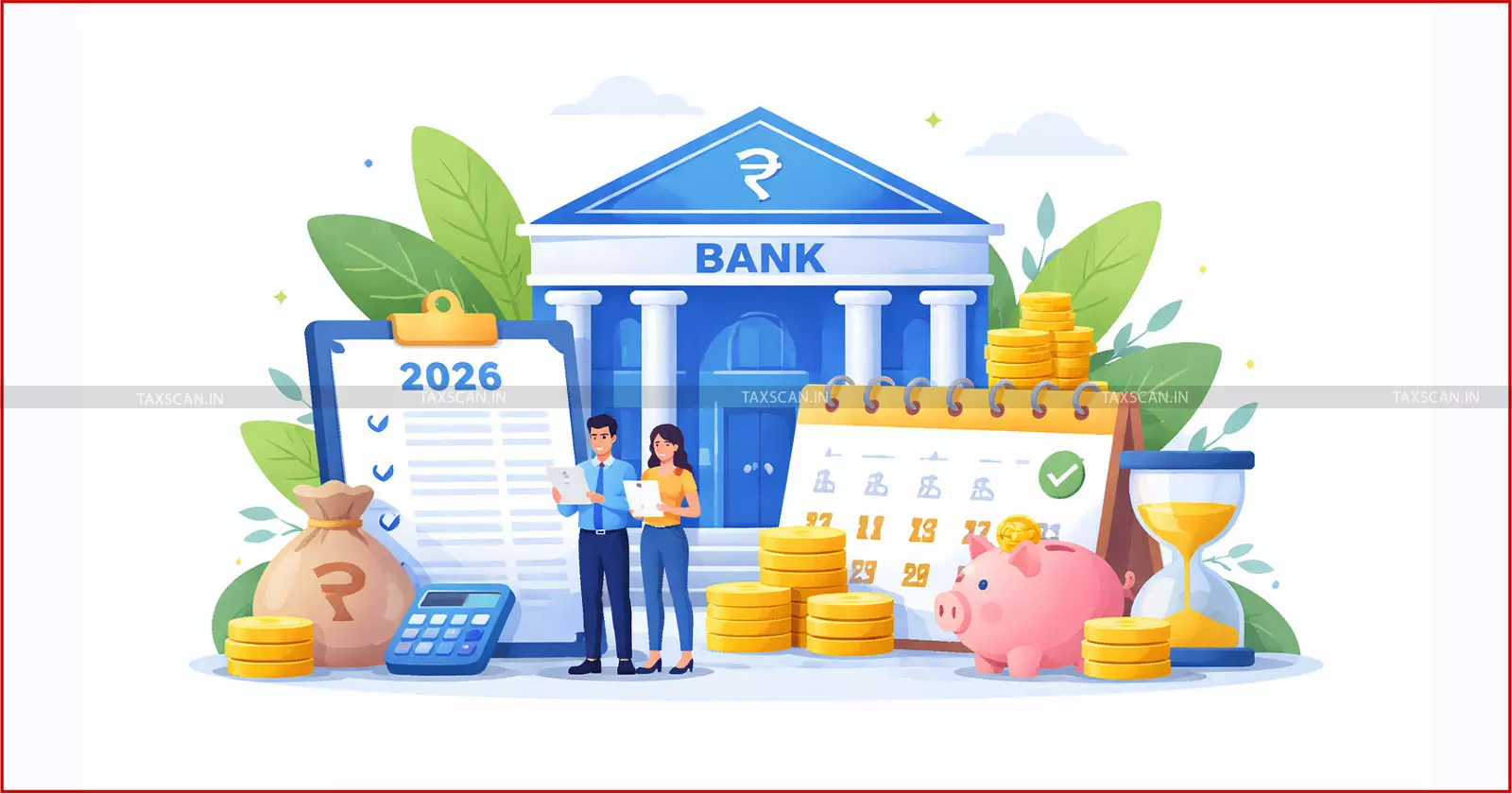
India’s financial compliance area is undergoing a major reset. With the Income Tax Act, 2025 and the Draft Income Tax Rules, 2026, effective from April 1, 2026, the government has introduced sweeping changes to how savings bank account transactions are monitored. The reforms aim to simplify routine banking for ordinary depositors while tightening oversight on high-value cash flows. This dual approach reflects the government’s intent to balance ease of compliance with stricter checks on unaccounted money.
Shift from Daily to Annual Monitoring
Under the old framework, depositors were required to quote their Permanent Account Number (PAN) for any single cash deposit exceeding ₹50,000. This often meant repetitive compliance even for legitimate transactions spread across the year. The new rules replace this daily threshold with an annual aggregate limit of ₹10 lakh across all bank accounts. This change reduces friction for day-to-day banking while ensuring that large cash flows are captured through systemic reporting.
The Big Six Limits
The Draft Rules 2026 introduce six headline thresholds that reshape compliance obligations:
- Savings Account SFT Threshold: Aggregate cash deposits above ₹10 lakh per financial year trigger mandatory reporting by banks through the Statement of Financial Transactions (SFT).
- Current Account SFT Threshold: Businesses with cash deposits exceeding ₹50 lakh annually will have transactions auto-reported.
- PAN Requirement: Annual deposits or withdrawals crossing ₹10 lakh now require PAN, replacing the earlier ₹50,000-per-day rule.
- TDS for Non-Filers (Sec 194N): Non-filers face 2% TDS on withdrawals above ₹20 lakh and 5% TDS above ₹1 crore.
- TDS for Filers: Regular ITR filers face 2% TDS only on withdrawals exceeding ₹1 crore annually.
- Section 269ST Penalty: Receiving ₹2 lakh or more in cash in a single transaction or event attracts a penalty equal to the amount received.
PAN Quoting: Old vs. New
The overhaul of PAN quoting thresholds is one of the most significant changes.
- Cash deposits/withdrawals: From ₹50,000 per day → ₹10 lakh per year.
- Property transactions: From ₹10 lakh → ₹20 lakh.
- Vehicle purchases: From “any motor vehicle” (two-wheelers exempt) → ₹5 lakh, now including two-wheelers.
- Hotel/travel/event payments: From ₹50,000 → ₹1 lakh.
This aggregate-based approach means banks will monitor cumulative deposits across the year rather than flagging isolated daily transactions. It reduces unnecessary alerts while strengthening annual oversight.
How SFT Reporting Works
When aggregate cash deposits in a savings account cross ₹10 lakh in a financial year, banks must file an SFT with the Income Tax Department. This is not a notice but an automatic data transfer. The information then appears in the taxpayer’s Annual Information Statement (AIS) and Tax Information Statement (TIS) on the e-filing portal.
For compliant taxpayers, this poses no issue. For example, if deposits of ₹11 lakh are supported by salary or business receipts declared in the ITR, scrutiny is unlikely. Problems arise only when there is a mismatch between AIS data and declared income.
TDS on Cash Withdrawals – Section 194N
The rules on Tax Deducted at Source (TDS) for cash withdrawals remain a common source of confusion. The matrix for FY 2026–27 is as follows:
- ITR Filers: 2% TDS on withdrawals exceeding ₹1 crore annually.
- Non-Filers:
- 2% TDS on withdrawals above ₹20 lakh.
- 5% TDS on withdrawals above ₹1 crore.
This provision discourages excessive cash transactions and incentivises the timely filing of income tax returns.
Cash Transaction Rules Beyond Deposits
Sections 269SS, 269T, and 269ST extend compliance beyond bank deposits:
- Sec 269SS: No loan or deposit of ₹20,000+ may be accepted in cash (penalty = loan amount).
- Sec 269T: No repayment of loan/deposit of ₹20,000+ in cash (penalty = repayment amount).
- Sec 269ST: No receipt of ₹2 lakh+ in cash from a single person in one day, one transaction, or one event (penalty = 100% of the amount).
These provisions target high-value cash flows outside the banking system, reinforcing the government’s push toward digital transactions.
Clarifications and FAQs
- Savings Account Balance: There is no cap on maintaining balances above ₹10 lakh. The threshold applies only to cash deposits.
- Electronic Credits: Salary, NEFT, IMPS, and UPI transfers do not count toward the ₹10 lakh cash deposit trigger.
- Without PAN: Form 60 (or Form 61 for agricultural income) can be used, though PAN is strongly recommended due to Aadhaar-PAN linkage.
- Scrutiny Window: Notices can be issued up to 3 years for transactions ≤ ₹50 lakh and up to 5 years for transactions > ₹50 lakh.
- Cash Gifts: Gifts from specified relatives are exempt under Section 56(2), but documentation such as a gift deed and proof of the donor’s funds is essential.
Implications for Taxpayers
For ordinary depositors, the reforms reduce the burden of quoting PAN for routine transactions. For businesses and high-value cash handlers, however, the rules impose stricter compliance and reporting obligations. The emphasis on aggregate monitoring ensures that large cash flows are captured without disrupting everyday banking.
Taxpayers must remain vigilant about documentation, PAN usage, and timely filing of returns. The AIS/TIS system now provides near real-time visibility, meaning mismatches are flagged faster than before.
Conclusion
The Income Tax Rules 2026 mark a decisive shift in India’s compliance framework. By moving from daily monitoring to annual aggregate tracking, the government has simplified banking for the average depositor while tightening the net around high-value cash transactions. The reforms underscore a broader policy push toward transparency, digitalisation, and accountability in financial dealings.
For individuals and businesses alike, the message is clear: maintain proper records, file returns on time, and avoid large cash dealings outside the banking system. Compliance is no longer about isolated transactions, it is about the bigger picture of annual financial behaviour.
Support our journalism by subscribing to Taxscan premium. Follow us on Telegram for quick updates
