Union Budget 2026: Full Process, What’s happening Inside & Expectations
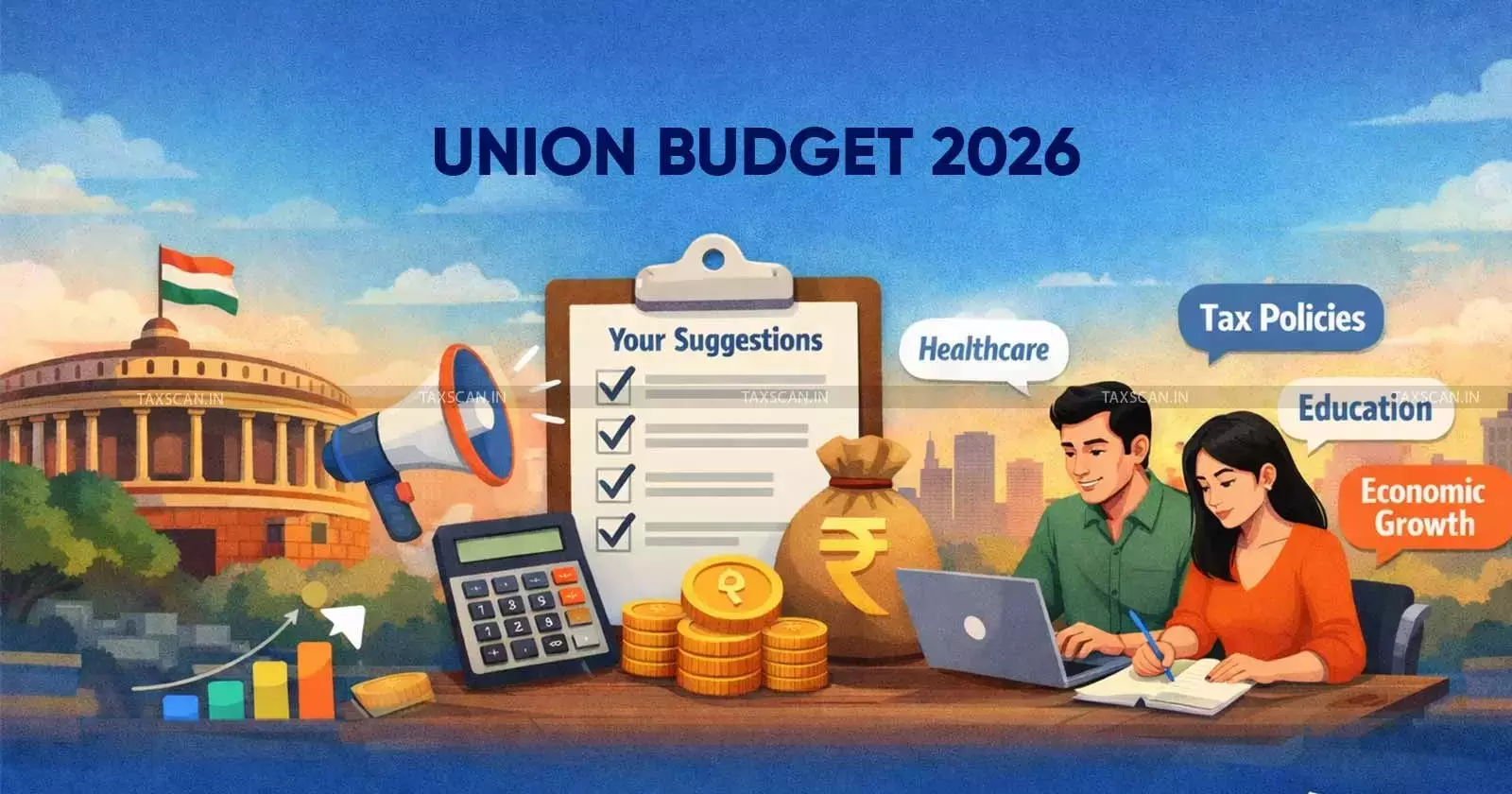
As India gets closer to February 1, 2026, all eyes on the North Block again, where the Union Budget for 2026-27 is quietly finalised. The Budget speech will last about two hours but real work going on for months, away from public eyes. This year's Budget is not just another yearly exercise. It comes at a politically sensitive time and also the start of a new tax law era.
This Budget also comes when interim fiscal data show pressure on government finances, with the fiscal deficit already reaching about 62.3% of the full-year target by November 2025, mainly because of higher capital spending and steady revenue collections.
Union Budget 2026-27 is set to be presented on February 1 (Sunday). Just two-three months later, big states like West Bengal, Tamil Nadu, Kerala, Assam, and Puducherry went for Assembly elections. At the same time, the Centre committed to a tight fiscal path, with a target to keep the fiscal deficit below 4.5% of GDP for FY27. Balancing elections and the economy is not easy.
Adding to complexity, the government already announced a new excise duty on cigarettes effective from February 1, 2026, the same day as Budget presentation, showing revenue measures rolling out even outside main Budget speech.
The Budget Circular and plan on paper
Formal Budget process starts with Budget Circular for 2026-27 issued by Department ofEconomic Affairs in August 2025. This circular is the backbone of Budget making. It laid down timelines, formats, data needs, and strict instructions for ministries.
As per the circular, all ministries had to submit Revised Estimates for 2025-26 and Budget Estimates for 2026-27 through the Union Budget Information System (UBIS). Circular stress realistic estimates, warn against inflated demands, and say clearly that liabilities can't be pushed from one Finance Commission cycle to another without approval.
It also fixed October 3, 2025 as the deadline for entering key data and scheduled pre-Budget meetings from October 9, 2025, chaired by the Expenditure Secretary. On paper, the system looks tight, digital, and disciplined.
Did the government follow the circular?
From reliable news reports, answers seem mostly yes, at least on timelines and process. Many reports confirm that Budget 2026-27 preparation formally began around October 9, 2025, exactly as in circular. Pre-Budget meetings with ministries held to discuss spending needs, revised estimates, and new proposals. There are also consultations with economists and sector experts later in the year.
These consultations also included discussions on long-term growth priorities, with experts flagging MSMEs, digital infrastructure, women’s workforce participation, and technology as key engines for India’s development goals towards 2047.
The government has not publicly released details of UBIS data entry or internal checks, but no report of delays or breakdowns. This suggests ministries mostly followed digital submission and timeline rules.
But some things stay outside public view. No confirmation if all ministries submit perfect realistic estimates, or if mid-year re-appropriations reduce in practice. These issues usually show up later only.
Confidentiality still important
The Budget Circular also put strong emphasis on confidentiality and data security. This is not new, but crucial.
As expected, traditional secrecy around Budget prep continues. The Halwa Ceremony, which marks the beginning of the final Budget printing stage and lock-in of officials, is likely to be observed again.
During this time, officials involved in Budget work stay inside North Block, with limited communication.
The famous “Blue Sheet”, which have final numbers on revenue, expenditure, and fiscal deficit, remain one of most guarded documents in government. Even small leaks can move markets, so access very limited.

Why Budget 2026 different
Budget 2026 is not just about spending and taxes. It marks the implementation of Income Tax Act, 2025, which come into force from April 1, 2026. This replaces Income Tax Act, 1961, which handle taxation for more than 60 years.
The Income Tax Act, 2025 has already been passed by Parliament and received Presidential assent in August 2025, making Budget 2026 a real transition Budget for taxpayers and tax administration.
Because of this, expectations from Budget 2026 are different. Taxpayers are not asking for big rate cuts. They want clarity, certainty, and easy compliance. The government expected to use this Budget to prepare ground for new law, reduce disputes, and avoid confusion in first year.
Taxpayers and businesses are also seeking clearer rules for NRIs, ESOP taxation, faster GST refunds, and simpler cross-border tax provisions, rather than headline tax rate changes.
The numbers and fiscal pressure
From fiscal view, government walking tight rope. Budget 2025-26 pegs fiscal deficit at 4.4% of GDP. For FY27, target to bring it down to around 4.1-4.2%, stay on track for long-term goal of 3%.
Capital expenditure is expected to stay high at around ₹12-12.5 lakh crore, though capex growth rate may slow compared to earlier years. This shows shift from “infrastructure at all costs” to more balanced way.
Disinvestment targets for FY27 are expected to be modest, with clear shift from large strategic sales to Offer for Sale (OFS) and asset monetisation. This reflect ground reality, where big privatisations struggled.
Export-oriented sectors, especially agriculture and rice exporters, also sought targeted Budget support to deal with rising costs and climate-related pressures affect competitiveness.
Election year signals
With elections coming in five states, Budget 2026 is also expected to send political signals.
There is talk of region-specific infra packages, metro rail expansion funds, flood control projects, and better welfare schemes. Expansion of Ayushman Bharat for seniors above 70, and higher housing support under PMAY 2.0, seen as measures with strong voter appeal.
Some analysts believe that beyond elections, Budget 2026 will also judge on how well it support sustainable growth while manage India’s debt-to-GDP ratio and long-term fiscal health.
Support our journalism by subscribing to Taxscan premium. Follow us on Telegram for quick updates