

GST in India: Indirect Tax Law, Structure & Compliance Simplified
The Goods and Services Tax (GST) is a single tax on goods and services across India, replacing many earlier indirect taxes.
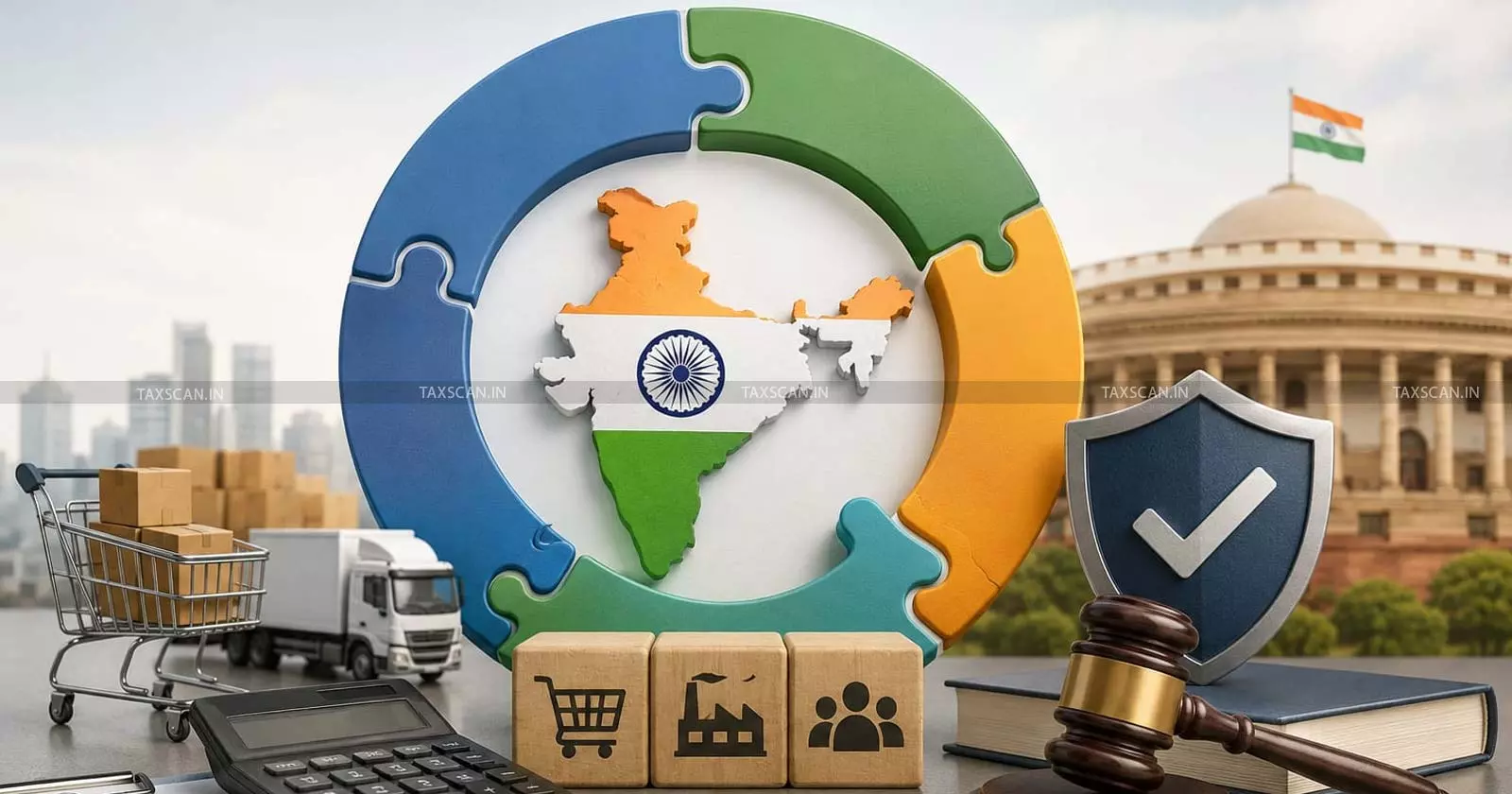
The Goods and Services Tax (GST) is India’s most important indirect tax reform, introduced on 1st July 2017 after nearly two decades of deliberation. It replaced a complex system of excise duty, VAT, and service tax, creating a unified framework under the principle of “One Nation, One Tax.”
GST is a comprehensive, multi-stage, destination-based tax levied on every value addition in the supply chain, ensuring transparency and uniformity across each state in India.
The Journey of GST in India
The journey of GST began in 2000 when a committee was set up to draft the law. That Committee was set up under PM Vajpayee to draft the GST law. In the year 2006, the Finance Minister proposed the GST rollout from April 2010.
Over the years, successive governments refined the proposal, with milestones such as the Empowered Committee’s dual GST model in 2008, the reintroduction of the GST Bill in 2014, and the launch of GSTIN in 2016. Finally, in 2017, Parliament passed four supplementary bills, paving the way for GST’s rollout.
Objectives of GST
The objectives of GST were clear. The Goods and Services Tax aimed to unify taxation, eliminate the cascading effect of levies, curb tax evasion, and widen the tax base.
The Goods and Services Tax reduced claims by linking input tax credit to supplier invoices and introducing e-invoicing. It simplified compliance and improved ease of doing business with processes from registration to return filing.
The Goods and Services Tax also streamlined logistics and reduced transport cycle times. Promoted competitive pricing. This boosted. Economic growth. The Goods and Services Tax removed the tax-on-tax effect or cascading. It raised registration thresholds to ease burdens on businesses and introduced a composition scheme for SMEs.
The Goods and Services Tax defined rules for e-commerce and improved logistics efficiency. Regulated the unorganized sector. These reforms enhanced transparency and efficiency in India’s tax system.

Components of GST
India’s Goods and Services Tax (GST) framework comprises four main components: CGST, SGST, IGST, and UTGST, each designed to govern different types of transactions and ensure equitable revenue distribution between the Centre and States.
- CGST (Central Goods and Services Tax): Levied by the Central Government on intra‑state supply of goods and services. The revenue collected under CGST accrues to the Centre.
- SGST (State Goods and Services Tax): Levied by the State Governments on intra‑state transactions. The revenue is retained by the respective State.
- IGST (Integrated Goods and Services Tax): Imposed by the Central Government on inter‑state supplies, imports, and exports. The collected tax is shared between the Centre and the destination State, ensuring that tax follows the goods to the place of consumption.
- UTGST (Union Territory Goods and Services Tax): Applicable to Union Territories without a legislative assembly, functioning similarly to SGST for intra‑territory transactions.
Illustration:
- Sale within Gujarat worth ₹50,000 at 12% GST - ₹3,000 CGST + ₹3,000 SGST.
- Sale from Gujarat to Punjab worth ₹50,000 at 18% GST -₹9,000 IGST, credited to the Centre and destination state.
GST Rates in India (2026 Update)
| Rate | Category | Examples |
| 0% (Exempt) | Essential goods | Fresh vegetables, milk, eggs, rice, wheat, salt |
| 5% | Packaged food, medicines, and household necessities | Edible oils, spices, medicines, and basic consumer goods |
| 18% (Standard Rate) | General goods and services | Electronics, mobile phones, shampoos, soaps, and repair services |
| 40% (Luxury/Sin Tax) | Luxury and sin goods | Aerated drinks, cigarettes, tobacco products, and high‑end vehicles |
Special Rates
- 3%: Gold, silver, and precious stones
- 0.25%: Rough precious and semi‑precious stones
- 1.5% - 6%: Composition scheme rates for small businesses
Before GST was introduced, India’s indirect tax system was complicated. Different taxes like excise duty, VAT, CST, entertainment tax, and entry tax were often charged together on the goods or services.
The GST replaced most of these taxes with a unified system. A few levies like customs duty, stamp duty, and taxes on petroleum and alcohol remain outside its scope.
For example, goods made in a factory were first charged excise duty by the Centre and then VAT by the State when sold, raising the final cost. The GST replaced most of these taxes with a single, unified system. Only a few levies like customs duty, stamp duty, and taxes on petroleum and alcohol remain outside its scope.

New GST Compliance
From 2026, India’s GST system will become more automated and stricter to improve accuracy and reduce fraud. The new rules focus on digital verification, timely filing, and secure access to the GST portal.
Main Updates
- Blocked Return Filing: If your Input Tax Credit (ITC) doesn’t match your records or if Reverse Charge Mechanism (RCM) tax isn’t paid, the GST portal will block GSTR‑3B filing. This prevents filing based on estimates.
- Three‑Year Filing Limit: Starting December 1, 2025, taxpayers can’t file any GST return (monthly, quarterly, or annual) that is over three years late.
- Multi‑Factor Authentication (MFA): From April 1, 2025, all GST portal users must use MFA for added login security.
- Biometric Verification: Company directors must complete biometric authentication at GST Suvidha Kendras.
- Input Service Distributor (ISD) Registration: Businesses with multiple GSTINs under one PAN must register as ISD from April 1, 2025.
- E‑Invoice Reporting: Taxpayers with an annual turnover above ₹10 crore must report e‑invoices within 30 days of issue.
The Goods and Services Tax (GST) has transformed India’s indirect tax system by bringing uniformity, transparency, and efficiency. It replaced multiple overlapping taxes with a single structure, making compliance easier for businesses and reducing costs for consumers. With ongoing reforms and digital updates, GST continues to evolve toward a more simplified and secure framework that supports India’s growing economy.
Support our journalism by subscribing to Taxscan premium. Follow us on Telegram for quick updates
