

GST Registration in Agriculture: When Section 23 Saves You
Section 23 saves the farmer from being treated like a corporate taxpayer and allows him to focus on what he does best — growing food.
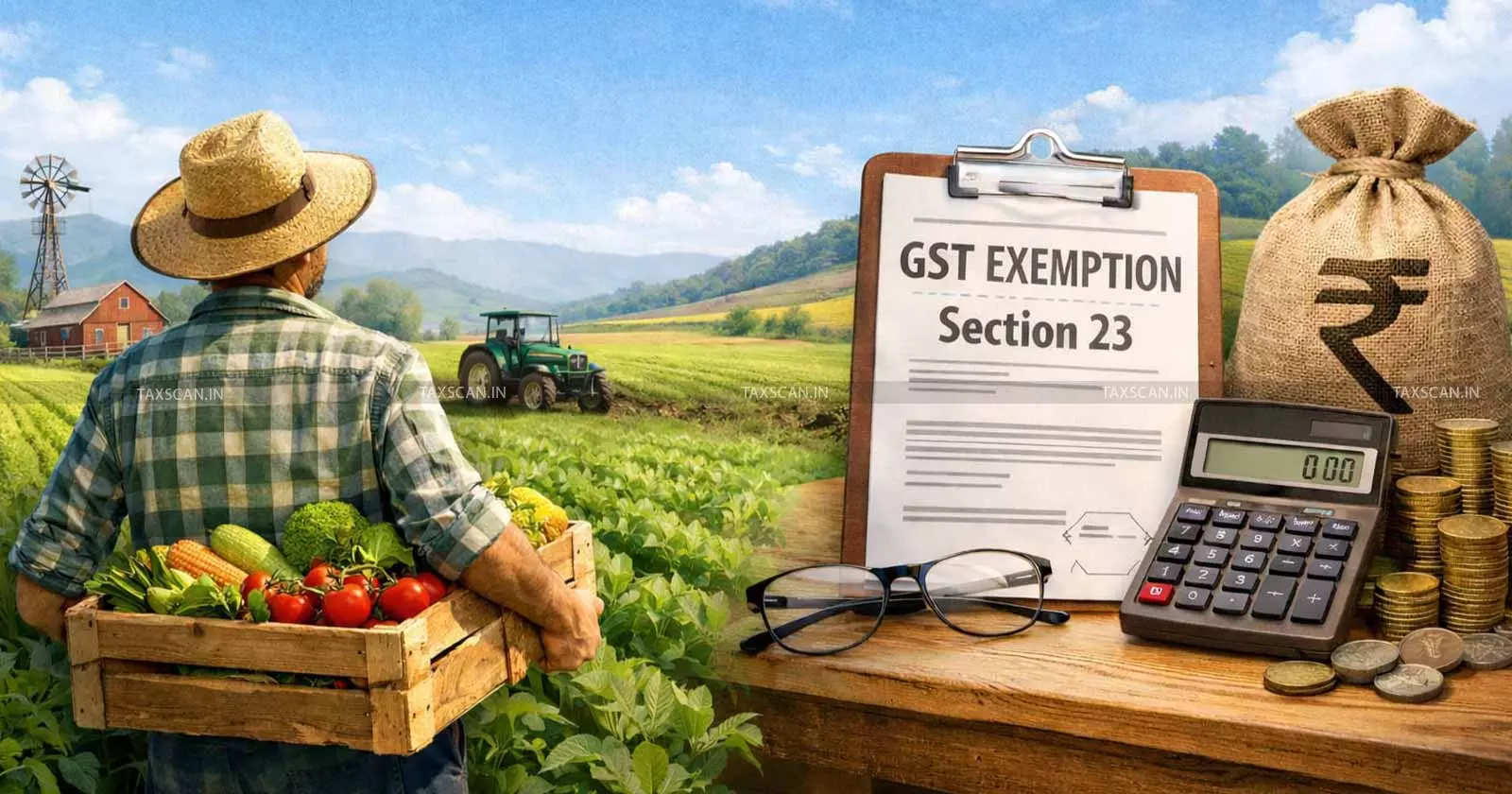
The goods and services tax ( GST ) has transformed India's indirect tax regime since its introduction in 2017. For most businesses, registration under GST is mandatory once the turnover crosses the prescribed thresholds. But agriculture, given its socio-economic importance, has always received special treatment under India’s tax laws.
Section 23 of the Central Goods and Services Tax Act, 2017 (CGST Act) provides crucial relief to agriculturists, exempting them from registration requirements. It is a deliberate policy choice to safeguard farmers from compliance burdens while ensuring food security and rural stability.
GST registration
GST registration is the process through which a taxpayer formally enrols under the Goods and Services Tax system. Once registered, the business is issued a unique 15‑digit Goods and Services Tax Identification Number (GSTIN) by the Central Government.
This GSTIN serves as the official identity of the taxpayer within the GST framework and is used for all compliance, reporting, and tax-related activities. But as per Section 23 of the CGST Act, 2017, there are certain categories of persons who are not liable for registration, either by law or by notification.
Agriculture’s Special Position in Taxation
Imagine a small farmer in a rural area, selling sacks of freshly harvested wheat in the local street. His turnover for the season crosses ₹25 lakh, a figure that would normally trigger mandatory GST registration for most businesses. But here’s the catch: he is not a trader, not a processor, not a corporate entity.
He is simply an agriculturist, cultivating land with his family’s labour. Should he now be burdened with monthly returns, compliance costs, and input tax credit reconciliations? This is where Section 23 of the CGST Act, 2017 steps in as a safeguard.
Historically, agriculture has been tax-free under the Indian direct tax system. Agricultural income is exempt from central income tax under Section 10(1) of the Income-tax Act, 1961, to align with this constitutional boundary.
Even under erstwhile indirect tax regimes such as the Central Excise, Service Tax and VAT, agricultural produce and related services often enjoyed exemptions or concessional rates.
Section 23: The Agriculturist’s Shield
Section 23(1)(b) of the CGST Act states that an agriculturist, to the extent of supply of produce out of the cultivation of land, is not liable to registration. The Act defines “agriculturist” under Section 2(7) as an individual or Hindu Undivided Family (HUF) who undertakes cultivation of land by:
- Own labour
- Labour of family members
- Servants on wages (cash or kind) under personal supervision
What Counts as Agricultural Produce?
The exemption applies only to “agricultural produce,” defined as cultivation of plants or rearing of animals (except horses) for food, fibre, fuel, or raw material, with only minimal processing that does not alter essential characteristics.
Examples include:
- Crops like wheat, rice, cotton, fruits, and vegetables
- Allied activities such as poultry, cattle rearing, pisciculture, and sericulture
The key test is whether the produce remains in its primary form, merely made marketable for sale.
Leasing of agricultural land enjoys a GST exemption, but only when the land is actually used for agricultural purposes. When land is leased for farming, nurseries, floriculture, sericulture, or animal rearing, no GST is payable. However, if the land is leased for non-agricultural, commercial or industrial activities, the exemption does not apply
Practical Illustrations
Small Farmer Selling Wheat: No GST registration required, even if sales exceed ₹20 lakh, because the supply is agricultural produce.
Commission Agent Selling on Behalf of Farmers: Registration may be required, as the agent is engaged in business.
Agro-Processing Unit: If processing alters the essential characteristics (e.g., turning sugarcane into packaged sugar), GST registration is mandatory.
While agriculturists are exempt, businesses dealing with agricultural produce and including commission agents, traders, or processors may still require registration.
Agriculture supports over 42% of India’s population and contributes 18.2% to GDP (Economic Survey 2023–24). Burdening millions of farmers with GST compliance requirements would be impractical and counterproductive. Section 23 embodies a pragmatic balance: protect cultivators, but keep downstream businesses within the tax net.
Section 23 of the CGST Act is a lifeline for India’s farmers. Exempting agriculturists from GST registration, it saves them from compliance burdens, preserves their focus on cultivation, and sustains rural livelihoods. It carefully draws boundaries to ensure that businesses around agriculture remain accountable under GST.
By concluding this: In short, Section 23 saves farmers from paperwork, while keeping the agricultural economy integrated into India’s tax framework.
Support our journalism by subscribing to Taxscan premium. Follow us on Telegram for quick updates
